
Robert F. Kennedy Jr. is moving to formalize something the FDA has spent two years trying to contain. Kennedy is pushing regulatory changes that would allow compounding pharmacies to legally produce certain peptides the agency restricted in 2023 over safety concerns — a policy shift that would give legal cover to a shadow market already serving millions of Americans without medical oversight, prescription requirements, or quality controls. The question the proposal does not answer is whether legalization makes the market safer or simply makes it look more legitimate.
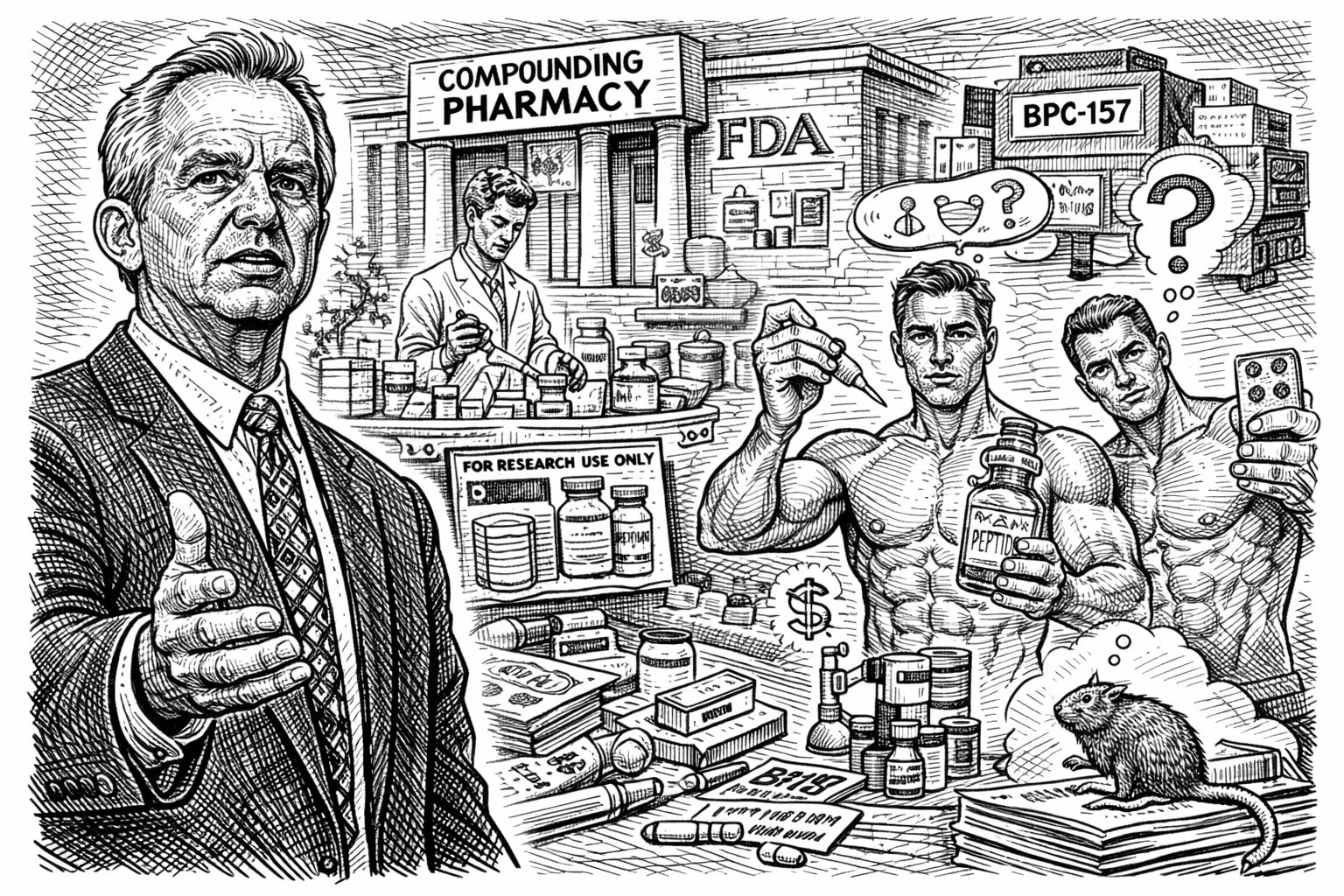
The case for the change rests on a harm-reduction argument: consumers are sourcing these compounds anyway, from overseas suppliers and gray-market websites labeled “for research use only,” and routing that activity through licensed U.S. pharmacies with mandatory prescriptions would at minimum put a physician in the loop. That logic is not without merit. The case against it is that the evidence base for many of the compounds under discussion does not support the access the policy would effectively normalize. As SSC has reported in The Wolverine Stack Isn’t a Breakthrough. It’s a Signal., BPC-157 — one of the most widely used peptides and a centerpiece of the regulatory debate — has 35 published studies behind it, all in animals, and a single human trial published in an alternative medicine journal. The U.S. Anti-Doping Agency classifies it under S0, reserved for substances with no established safety profile in humans. Compounding pharmacy access does not change that evidence base. It changes the branding around it.
The proposal is consistent with Kennedy’s broader Make America Healthy Again agenda, which has systematically reframed federal health policy around individual access and institutional skepticism of the FDA’s authority. On peptides, that positioning aligns Kennedy with longevity clinics, biohacking communities, and a wellness industry whose market Grand View Research estimated at $65.1 billion in 2024 — projected to reach $160.3 billion by 2030. That is the constituency the policy serves most directly. Whether it serves the broader public is a different calculation, and one the administration has not made publicly. Kennedy has acknowledged resistance from within the FDA, which suggests the regulatory fight is not settled and the timeline for any formal rule change remains unclear.
What is clear is that the policy debate is moving faster than the science, and the populations most likely to be absorbing the risk of that gap are not the ones with concierge medicine access and physician oversight. SSC’s broader peptide coverage this week examines how access to safe, supervised treatment is already being rationed by income and healthcare proximity — and how formalization without meaningful quality enforcement may deepen that divide rather than close it. The peptide era is already here. The only open question is whether the regulatory framework that arrives with it is built around public health or around market demand.