
For the past two years, “quiet luxury” functioned as both aesthetic and ideological signal. It offered a way to communicate wealth without spectacle — leaning on cut, fabric weight, and restraint rather than visible logos or ostentatious branding. The silhouette was the statement. The absence of a label was itself a kind of label. But that model depended on a consumer base with enough economic stability to prioritize subtlety over legibility. As inflation continues to shape spending behavior and discretionary income tightens across income brackets, that quiet signaling is beginning to lose its footing. What once read as refined is increasingly being read as invisible in a moment where consumers want their purchases to feel legible — to themselves and to others.
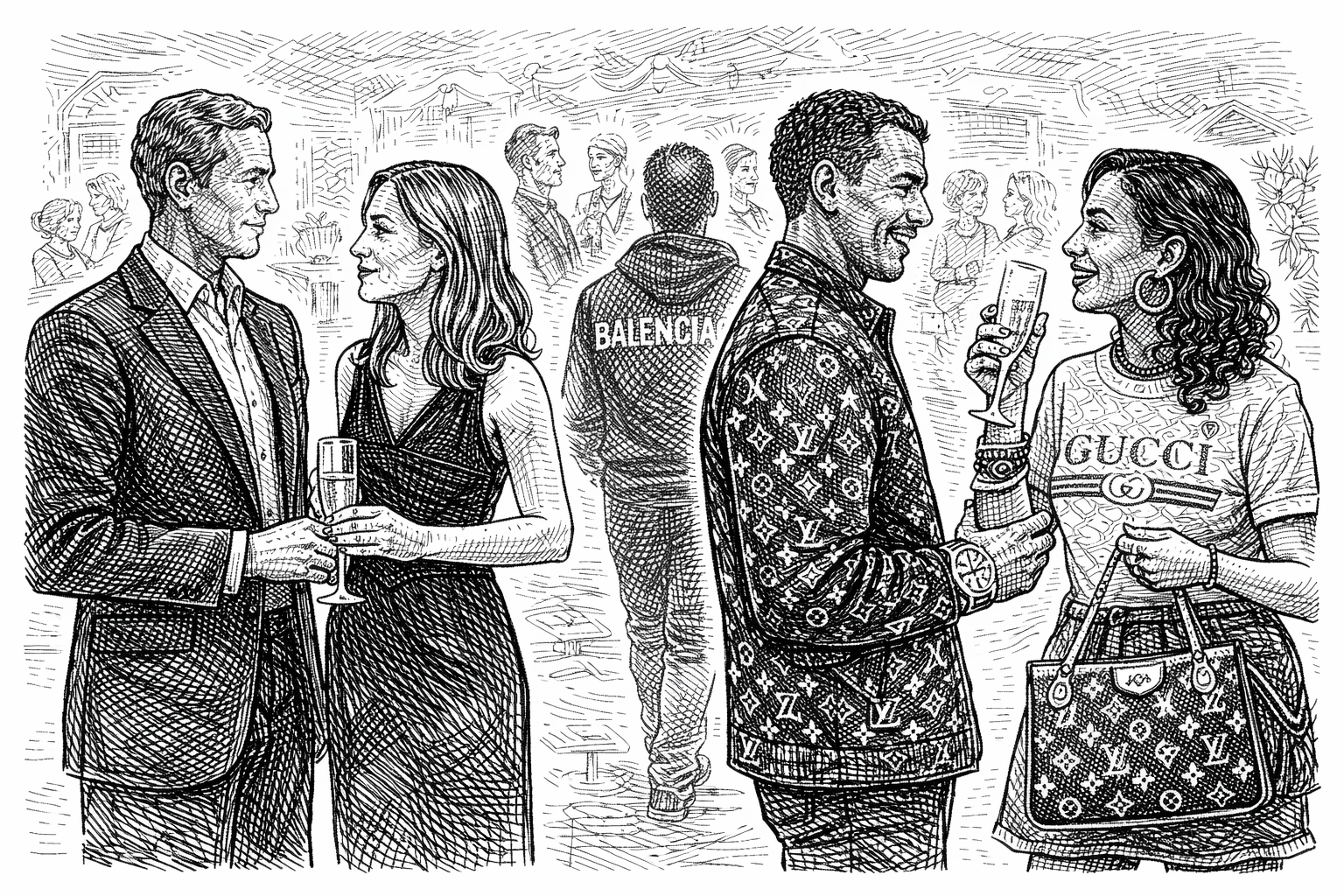
The numbers reinforce the shift. U.S. credit card balances surpassed $1.13 trillion in 2025, marking a historic high and underscoring how structurally strained consumer spending has become. At the same time, luxury resale platforms including The RealReal and StockX reported double-digit growth in logo-heavy items compared to minimalist pieces during the same period, suggesting that when money gets tighter, visibility gets louder. Consumers under financial pressure tend to favor items that communicate value outwardly — not just internally, and not just to themselves. The investment logic shifts. A recognizable logo functions as a legible return on spending. A linen blazer with no branding does not.
Brands that built their recent momentum on understatement are beginning to feel the pressure. Several have quietly reintroduced visible identifiers into their collections — embossed monograms, signature hardware, heritage logo placements — without framing the move as a reversal. But the adjustment is clear. The vocabulary of restraint is being diluted precisely at the moment when the aspirational consumer cohort that anchored it is under the most stress.
What is emerging is not the end of quiet luxury, but its repositioning. Discretion is becoming the exclusive province of those who no longer need to signal at all — those for whom the point has already been made, repeatedly and in other registers. Below that tier, visibility is being reclaimed by consumers who want their spending to register. That reclamation is not vanity. For many, it is a form of economic expression — a way of asserting that the sacrifice was real and the acquisition was worth it.
The divide being drawn here is not aesthetic. It is structural. Quiet luxury was always a class signal, but it operated on the assumption of a stable middle tier — people who could afford to be subtle because they were secure enough that subtlety wasn’t costly. That tier is shrinking. And as it does, the language of luxury continues to split between those who can afford to be invisible and those who cannot afford not to be seen. The implications extend beyond fashion. They track directly to how access and aspiration are being renegotiated across consumer categories in an economy where security is unequally distributed and spending is increasingly a statement of position.
This dynamic maps onto a broader pattern SSC has been tracking in The Access Shift — the way economic compression forces visible performance of value across sectors, from fashion to fitness to housing. When the middle thins, the symbolic registers on both ends intensify.