
Part of Structural Reality — examining how systems produce unequal outcomes.
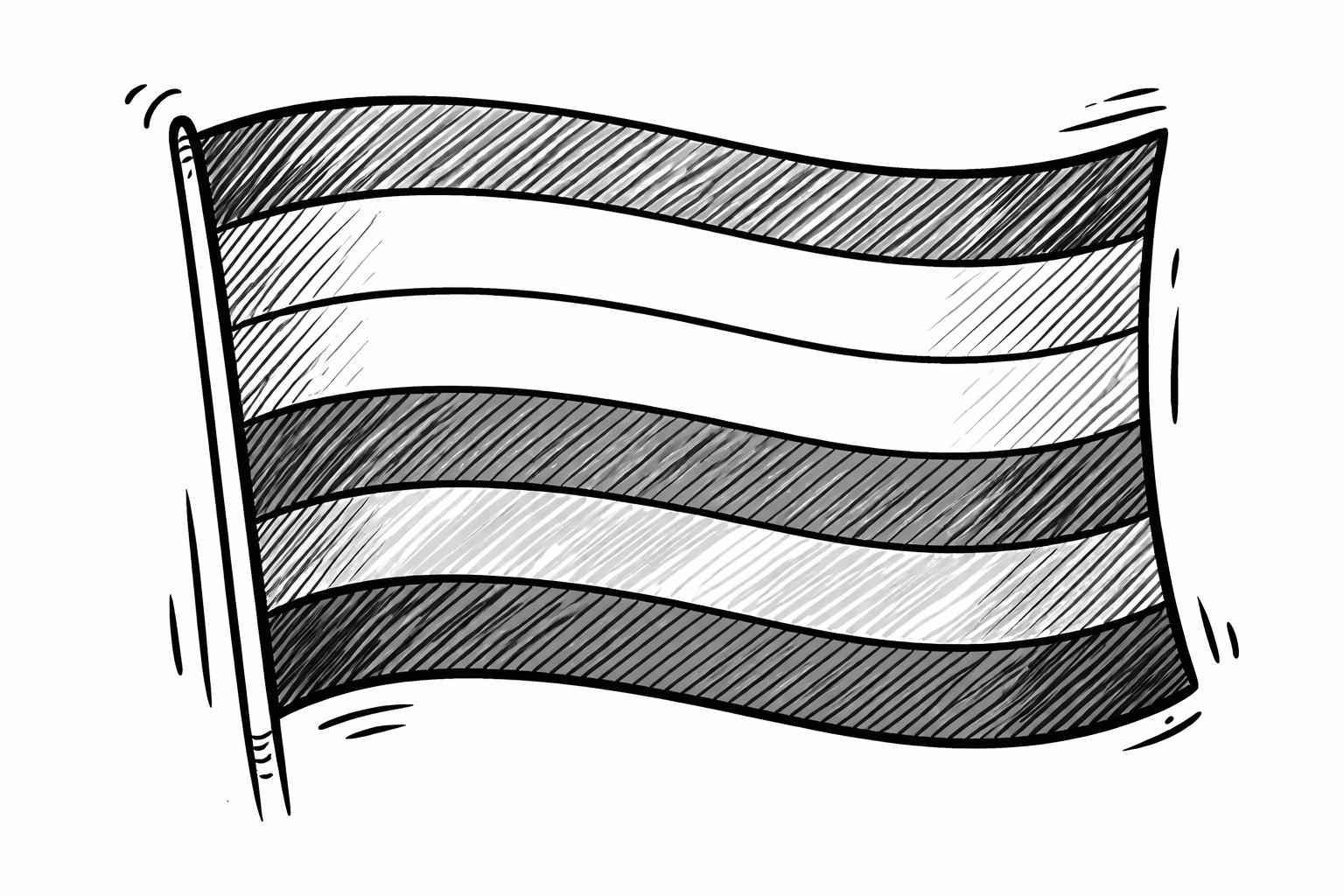
Boston University has paused its decision to remove Pride flags and other personal displays from outward-facing windows across campus, following swift backlash from students, faculty, and the broader public. President Melissa Gilliam issued an apology. The policy’s enforcement was suspended. By the most visible measures, the institution responded. What it has not done is resolve the question the policy raised — and that question will return, because the conditions producing it have not changed.
At the center of the controversy is a policy framed around neutrality — specifically, regulating what can be displayed in spaces visible to the public. On paper, neutrality-based expression policies are often positioned as content-agnostic, applying equally across viewpoints regardless of what they express. In practice, neutrality rarely operates evenly, and it rarely surfaces in a vacuum. These policies tend to appear in specific cultural and political moments, targeting specific categories of expression, enforced with specific urgency. The framing is consistent. The application is not.
That asymmetry is what drove the backlash at BU, and it is what makes the pause insufficient as a resolution. Pride flags, for many students and faculty, are not decorative. They are functional signals — of safety, of recognition, of whether an institution’s stated commitment to inclusion is reflected in its physical environment or confined to its promotional materials. Removing them, even under a broader policy framework that technically applies to all displays, reads less like standardization and more like withdrawal. The message received is not that all expression is being regulated equally. It is that this particular form of expression has become too visible, too political, or too inconvenient to protect.
That reading is not paranoid. It is historically informed. Boston University’s policy shift did not emerge from institutional isolation. It arrived inside a national environment in which diversity, equity, and inclusion programs are being dismantled across higher education, in which federal pressure is being applied to universities through funding mechanisms, and in which the legal architecture protecting LGBTQ+ expression in institutional settings is being actively contested. As SSC has documented in its coverage of the DEI rollback and the higher education funding squeeze, the tools of institutional pressure do not always arrive as direct mandates. They arrive as policies framed around order, consistency, and neutrality — and the communities most affected are left to parse the difference between a procedural adjustment and a political signal.
The university’s decision to pause enforcement reflects a familiar institutional pattern that SSC has tracked across multiple beats. Policy is introduced under the language of consistency or operational clarity. Community response reframes the impact as something different from what the policy described. Leadership recalibrates in real time, issuing measured language that acknowledges the concern without fully owning the original decision’s implications. The underlying tension — how institutions balance expression with control, and who bears the weight of that balance — remains structurally unchanged. A pause is not a resolution. It is a deferral, and deferrals have a way of returning when the political moment feels less watched.
This is not an isolated moment at one university. Across higher education and corporate environments, organizations are attempting to formalize the boundaries of expression — what can be displayed, said, or signaled in shared spaces — with increasing frequency and increasingly careful language. These efforts are not random. They are emerging in response to a specific cultural and political climate in which visibility itself has become contested terrain, and in which institutional leaders are calculating what forms of expression they can afford to protect and what forms have become liabilities. Those calculations are not being made in good faith neutrality. They are being made under pressure, and the communities most directly affected — LGBTQ+ students and faculty, communities of color, anyone whose presence in an institution is not assumed as the default — are the ones absorbing the consequences of how those calculations land.
Visibility is not neutral. What is allowed to remain visible — and what is quietly removed — shapes how people understand their place within an institution, whether they are wanted as participants or merely tolerated as demographics. Policies that treat all expression as equivalent can obscure the reality that not all expression carries the same historical or social weight. A Pride flag and a sports pennant are not the same kind of signal, and a policy that treats them as equivalent is not neutral. It is a choice — about whose belonging requires institutional protection and whose can be standardized away without consequence.
The cycle Boston University is caught in is a familiar one. Institutions attempt to standardize. Communities push back. Adjustments are made. Apologies are issued. But the underlying policy architecture remains, and the conditions producing it intensify. The core question — who gets to be seen, under what conditions, and at whose discretion — does not disappear when enforcement is paused. It waits for the next moment when the political environment feels less volatile and the cameras are pointed elsewhere.