
What matters here isn’t just that Vans made a split-toe sneaker. It’s what that decision signals about where the brand sees itself going.
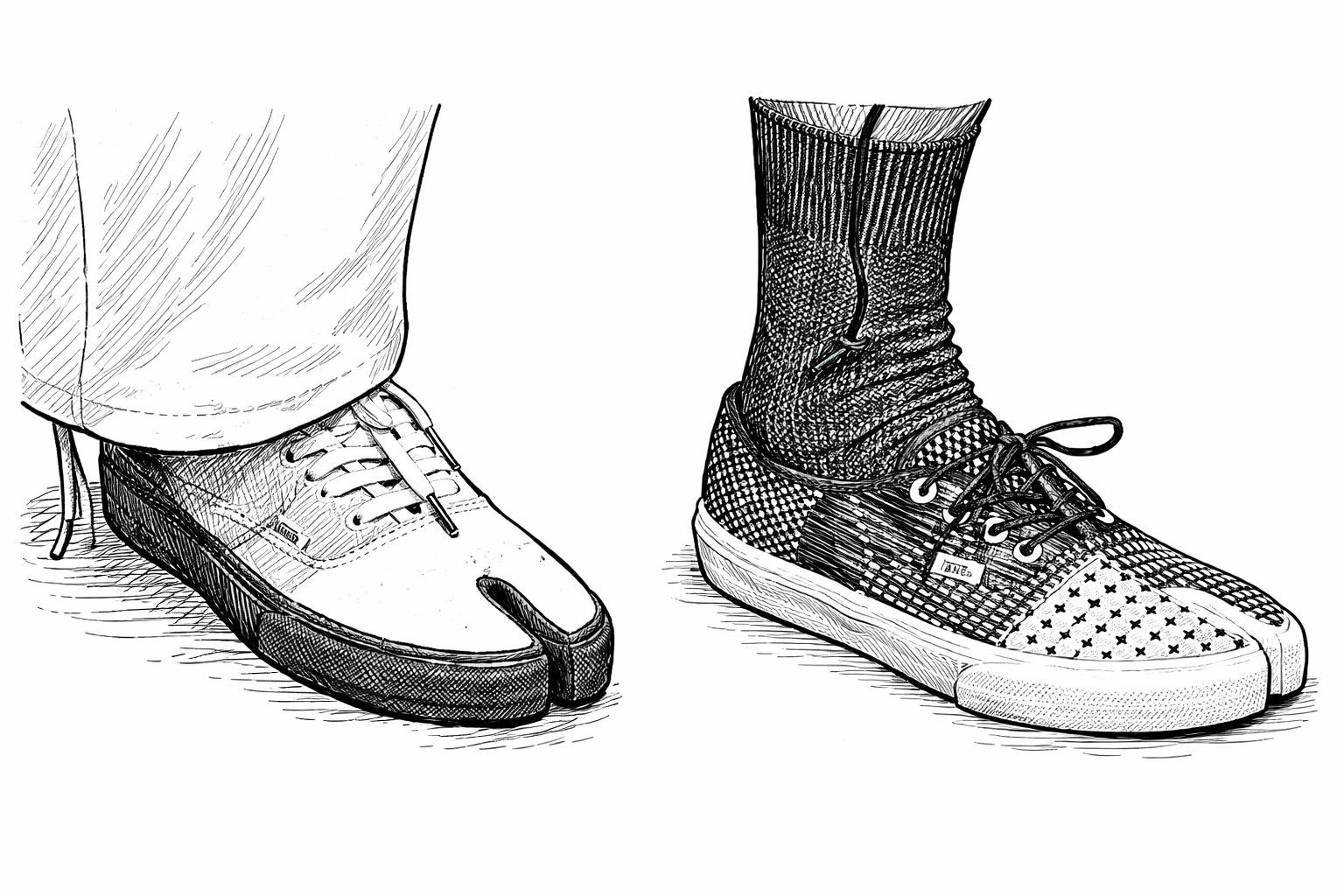
The Vans Authentic has always represented consistency. It’s one of those shoes that doesn’t need reinvention because its value is tied to familiarity. That’s why this move feels disruptive. Vans is taking one of the most stable silhouettes in its catalog and using it as a testing ground for something that doesn’t belong to skate culture at all.
The tabi toe doesn’t come from skate. It comes from cultural tradition and high fashion. When you see that split construction, you immediately think of Maison Margiela before you think of Vans. That’s intentional. Vans isn’t just borrowing a design detail. It’s borrowing context.
And that’s where FDMTL becomes critical. This isn’t a random design experiment. FDMTL anchors the shoe in Japanese craftsmanship, where tabi footwear actually originates. Without that, this risks feeling like appropriation or trend-chasing. With it, the shoe reads as translation. Vans is stepping into a different design language, but doing it with a partner that gives the move legitimacy.
There’s also a bigger shift happening underneath this. Vans has spent years being culturally relevant without needing to participate in high fashion conversations. But the market has changed. Sneakers are no longer siloed. The same consumer who wears Vans also understands runway references, niche silhouettes, and archival design language.
That’s why this matters. Vans isn’t just making a “fashion” shoe. It’s signaling that it understands its audience has evolved.
And the risk is real. A split-toe Authentic is going to challenge Vans’ core consumer. This is not an easy wear. It disrupts muscle memory. It changes how the shoe looks on foot, how it feels, even how it’s perceived socially. But that tension is the point. Brands don’t reposition themselves by staying comfortable.
You’re also seeing convergence. The Nike Air Rift coming back into the conversation, Margiela maintaining its hold on the tabi space, and now Vans entering it from a heritage angle. That’s three different lanes, all pointing to the same silhouette. When that happens, it’s usually not a coincidence. It’s a signal that something is crossing from niche into broader cultural adoption.
So the real story isn’t “Vans made a new sneaker.”
It’s that Vans is testing how far it can stretch its identity without losing it.
And in 2026, that might be the most important move a legacy brand can make.