
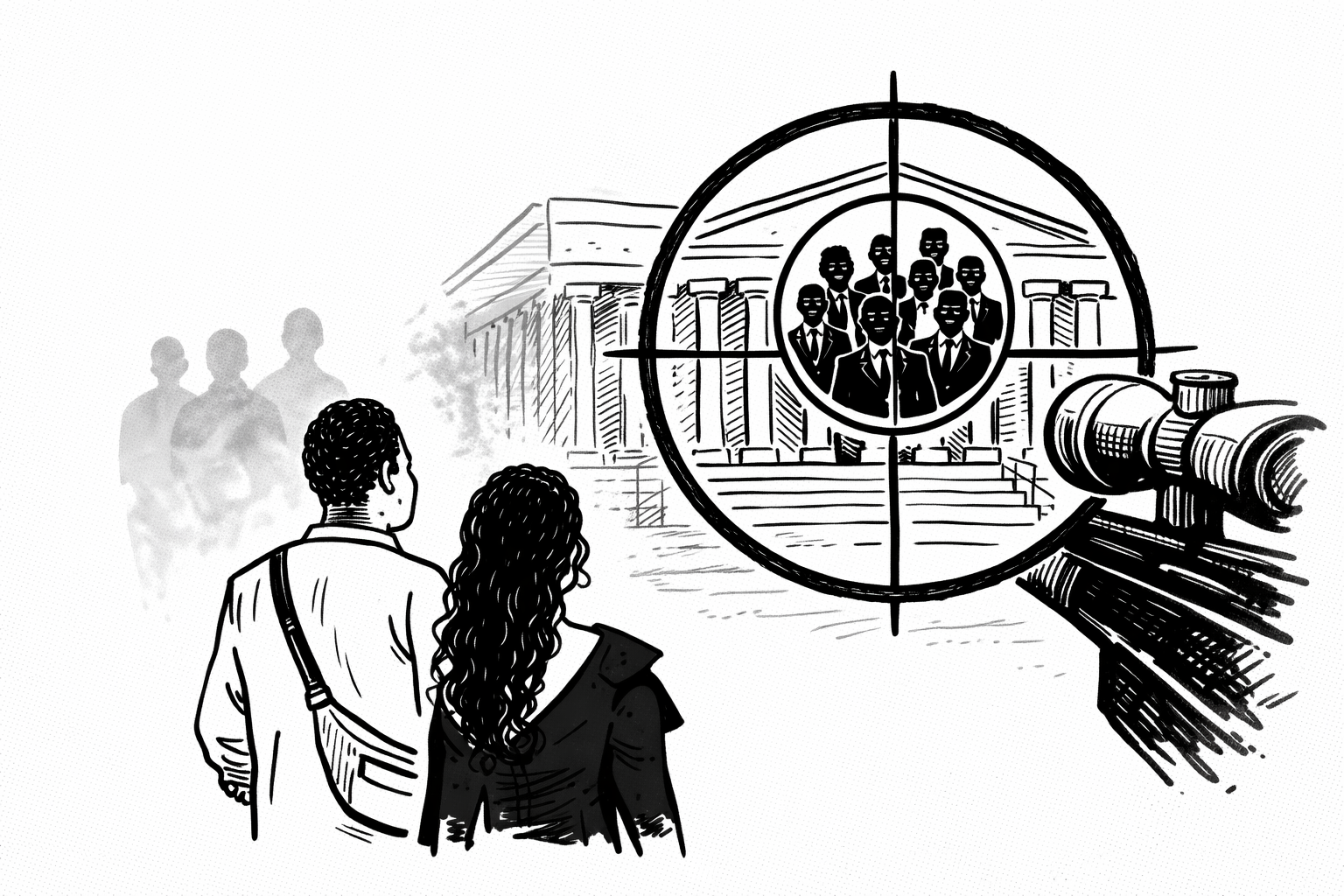
The Congressional Black Caucus Foundation has been sued for giving Black students money to go to college.
That sentence should land before any legal framing arrives, because the framing is exactly where the story gets obscured. A lawsuit filed April 2 by the American Alliance for Equal Rights alleges that the foundation’s scholarships discriminate on the basis of race, positioning the case as part of a broader legal movement to dismantle programs meant to remedy the effects of past discrimination. At the center of the complaint is the CBC Spouses Education Scholarship — a program that has awarded scholarships ranging from $2,500 to $20,000 to approximately 300 students per year, limited to Black students in districts represented by members of the Congressional Black Caucus.
The program has awarded over $11 million to Black recipients since 1988. It was built in direct response to a documented structural reality: Black students disproportionately attend underfunded schools in majority-Black districts, with shrinking federal investment in public education widening the gap. The scholarship did not create that disparity. It was designed to address it.
The American Alliance for Equal Rights is led by Edward Blum, the same strategist behind the Supreme Court cases that dismantled race-conscious admissions in 2023. Legal experts have characterized his organization’s recent focus on nonprofits as the third phase of a deliberate strategy: first higher education, then corporate diversity and hiring, and now race-based funding and grantmaking activity. The plaintiffs in this case are an Asian student and a Hispanic student — both denied eligibility — and the legal claim invokes the Civil Rights Act of 1866, a Reconstruction-era law originally designed to protect newly freed Black Americans from discrimination.
The inversion is not accidental. It is the architecture of the argument.
The effects of this strategy are already measurable. The number of scholarships with race, ethnicity, or gender criteria in the National Scholarship Providers Association database dropped 25% between March 2023 and June 2025 — before this lawsuit was filed, and before any court had ruled against race-conscious private giving. The chilling effect is the point. Institutions and foundations do not wait for adverse rulings. They restructure to avoid litigation exposure, and in doing so, quietly dismantle the programs that remain.
What the lawsuit seeks makes the intent concrete: the American Alliance for Equal Rights is asking the court to issue a declaratory judgment that the scholarship violates the Civil Rights Act, an injunction barring the foundation from considering race in the program’s administration, and an order requiring the foundation to reopen and rerun the application process under race-neutral criteria. In practice, that would eliminate the program as it has existed for nearly four decades.
The structural logic here connects directly to what is happening at the federal level simultaneously — DEI rollbacks in university funding, the Louisiana v. Callais voting rights case moving toward a Supreme Court ruling, and an executive environment in which the machinery of racial equity is being systematically targeted and reclassified as discrimination. The CBCF lawsuit is not an isolated legal filing. It is one coordinated instrument in a much larger effort to eliminate the infrastructure through which Black communities have historically accessed opportunity — scholarship by scholarship, program by program, institution by institution.
The foundation has not yet issued a detailed public response. No court ruling has been issued. But the scholarship’s future, and the futures of programs like it, are already in the balance.