
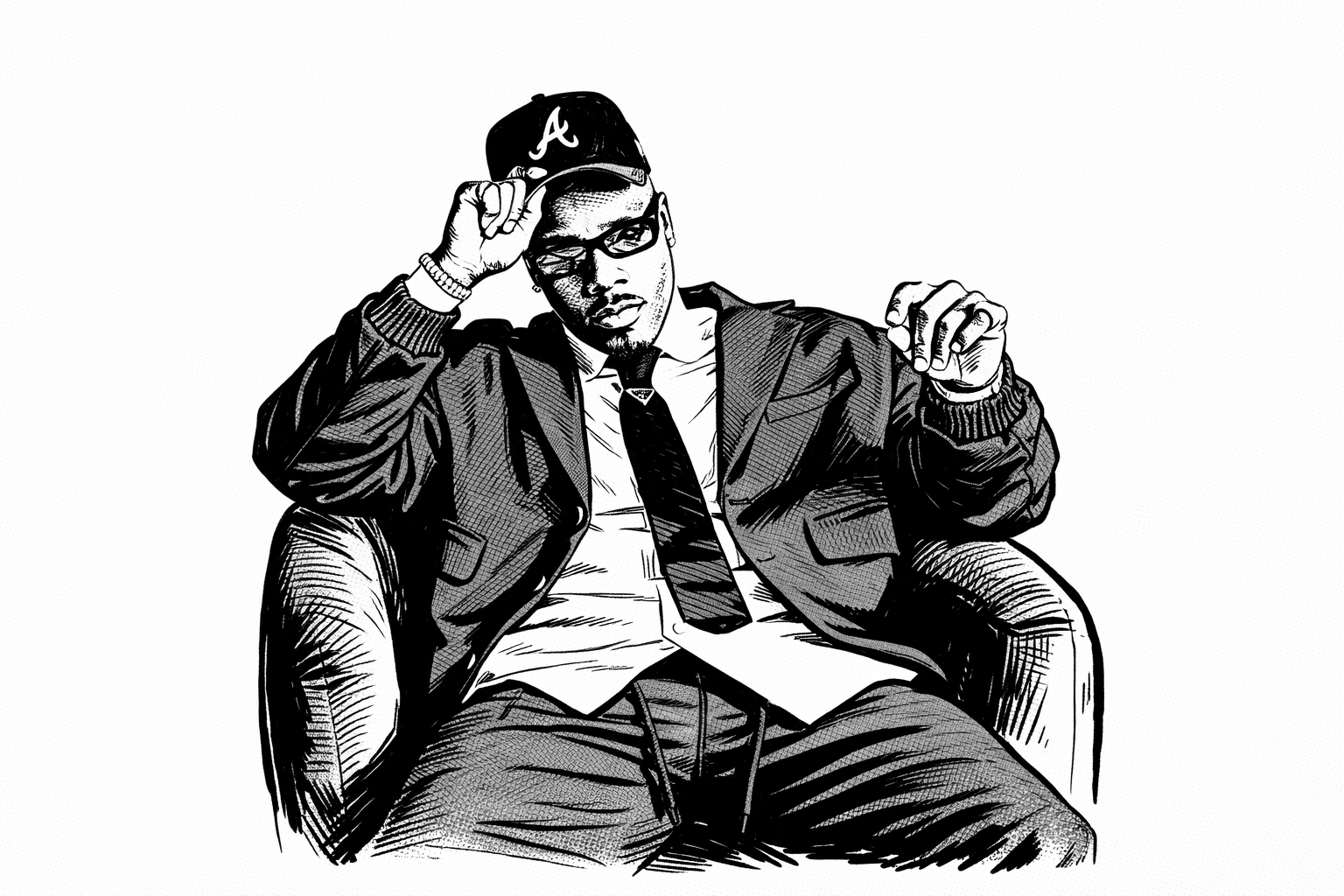
The facts of this moment are specific enough to matter. A Dallas-based portrait artist named B White approached DaBaby outside a nightclub with a painting he had made of two of the rapper’s daughters — rendered from photographs DaBaby himself had posted publicly. DaBaby walked past without acknowledging him. When footage of the exchange circulated and people started asking questions, DaBaby addressed it on a livestream. “I’m not the type of father that’s into grown men discussing my daughters, painting pictures of my daughters, taking pictures of my kids,” he said. “I don’t play like that. I’m not accepting no painting of my daughters outside of a nightclub.” When the artist refused to remove the image from his own page, DaBaby escalated. “You still got my daughters on yo page as a grown man after I made it clear I ain’t comfortable with that,” he wrote. “So when God put me back in front of you, I’m going to show you how serious I am about my daughters.”
The portrait, by all accounts, was clean, respectful, and technically accomplished. Nothing in the image itself was inappropriate. The artist had used publicly available photographs — images DaBaby had posted — as his source material. Those are the facts the controversy has to account for, because they complicate the protection framing in ways that the livestream response did not acknowledge.
The instinct underneath DaBaby’s reaction is real and worth taking seriously. Many Black parents carry a heightened sense of responsibility shaped by lived experience in a world that demands vigilance around their children’s safety and image. That urgency is not irrational. In 2026, with the documented rise of AI-generated content, deepfake technology, and the specific horror of child exploitation material circulating through digital networks, a parent’s discomfort with their children’s image being produced and distributed by strangers — even with good intent — has a legitimate foundation. The discomfort is understandable. The threat is a different conversation.
Because the threat is what this moment actually hinges on. DaBaby did not ask the artist to remove the painting. He demanded it, framed the continued display as provocation, and promised a physical response when their paths crossed again. That is not the language of protection. It is the language of control — a claim that proximity to his daughters, even in painted form, belongs to him to adjudicate and enforce with his body if necessary. The artist had a legal right to paint from publicly posted photographs. DaBaby had a right to be uncomfortable. Neither of those things required a threat to resolve.
This is where the reaction has split — and where the split reveals something worth examining. Some read DaBaby’s posture as a father setting firm boundaries in a world he understands. Others see a performance of masculine authority that escalated a manageable situation into something that required the artist to fear what would happen when they were in the same physical space again. Both readings are responding to something real. The protection instinct and the control performance are not mutually exclusive. They are often the same gesture, made visible by what happens when the person on the receiving end doesn’t comply.
Hip-hop culture has long constructed masculinity through what is asserted, defended, and controlled — and family, particularly daughters, sits inside that framework rather than outside it. As SSC covered in When Influence Becomes a Liability, the public performance of identity for Black artists in the social media era is never simply personal. It becomes representative. DaBaby’s declaration that he does not “move like that” is addressed to the artist and to an audience simultaneously — it is a statement about what kind of father he is, what kind of man, and what the consequences of testing those definitions will be. Social media rewards that clarity. It does not reward the messier question underneath it: whether the threat served his daughters’ safety or his own image.
The artist’s position in this dynamic has been largely absent from the conversation. B White had painted portraits for other celebrities before. The intent, by his own account and by the observable content of the work, was appreciation — a kind of tribute that portrait artists have directed at public figures for as long as public figures have existed. He was advised that famous people respond better to art of their loved ones than to art of themselves. He chose the photograph that was clearest. None of that makes his judgment unimpeachable, but it does make the “weirdo” framing DaBaby reached for — using photographs the rapper himself made public to characterize the artist’s interest in his daughters as something menacing — a reframing that served DaBaby’s narrative more than it described the situation.
Why This Matters
When fatherhood becomes performance — when it is presented to an audience, shaped for response, and enforced through threat — it raises a question that the protection language tends to foreclose: who does this actually serve? DaBaby’s daughters are not safer because a respectful painting was demanded off an artist’s page at the cost of a public threat. What changed is the story — from a rapper who walked past a fan to a father who does not play about his children. Those are different projects. The conflation of the two is where the conversation actually lives.