
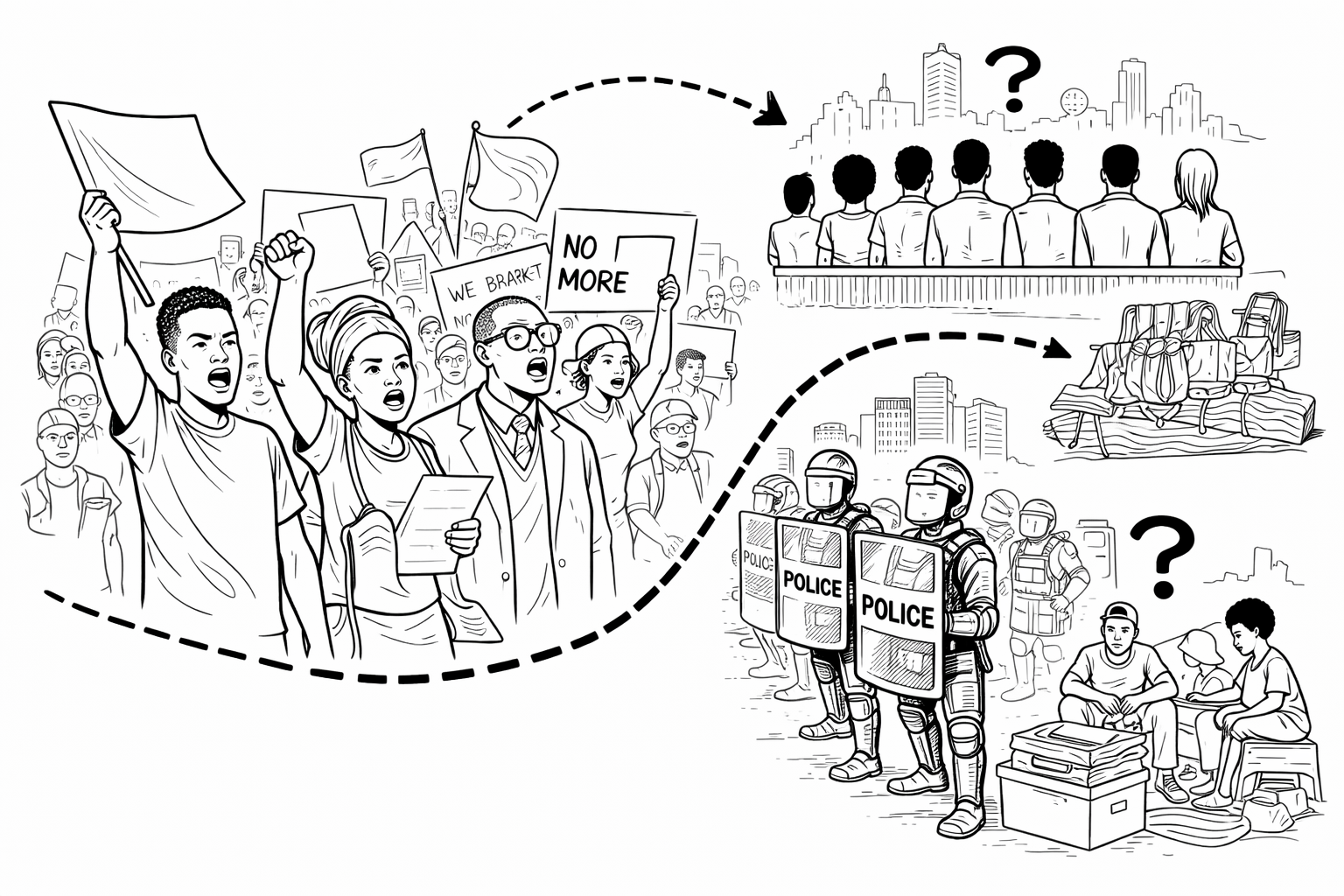
The African Gen Z protest wave that began in Kenya in June 2024 — triggered by a Finance Bill that would have raised taxes on bread, financial services, and motor vehicles — did not end with that bill’s withdrawal. It spread. In 2025, protests reignited in Kenya; demonstrations in Madagascar culminated in the unseating of the government; protests erupted in Morocco after maternal deaths in a public hospital; and youth in Togo poured into the streets after the arrest of a rapper known for denouncing corruption. These events earned 2025 the label “the year of protest,” with young people as the primary drivers — confronting heavily armed police, arrests, and repression.
The movements share a structural diagnosis: Corruption drains resources from hospitals, universities, infrastructure, and food security, worsening every other crisis. Young people see billions looted while graduates sell goods on street corners and patients die in public hospitals. Degrees no longer guarantee jobs, and informal work rarely covers rent or basic dignity. Africa is home to around 532 million young people aged 15-35, representing more than 22% of a global cohort that will shape labor in the coming decades. Africa’s youth population is expected to continue increasing through the 2070s. The governments being protested are running out of time to respond. The demographic pressure is not going to ease.
The SSC angle is the connective tissue to the Black American story. The same generation — globally networked, digitally organized, economically excluded despite credentials — is running the same confrontation on multiple continents. Kenya’s Gen Z protests explicitly echoed Nigeria’s #EndSARS. African American Gen Z navigates a labor market that SSC documented in The Job Market Isn’t Crashing. It’s Closing. — entry-level positions declining, AI screening compressing access before a human sees a resume. The protest wave in Africa and the quiet economic displacement documented in the US are expressions of the same generational squeeze. The specific mechanisms differ. The structural position — educated, excluded, told to wait — is the same.