
Part of Society & Economy — examining how systems shape income, work, and opportunity
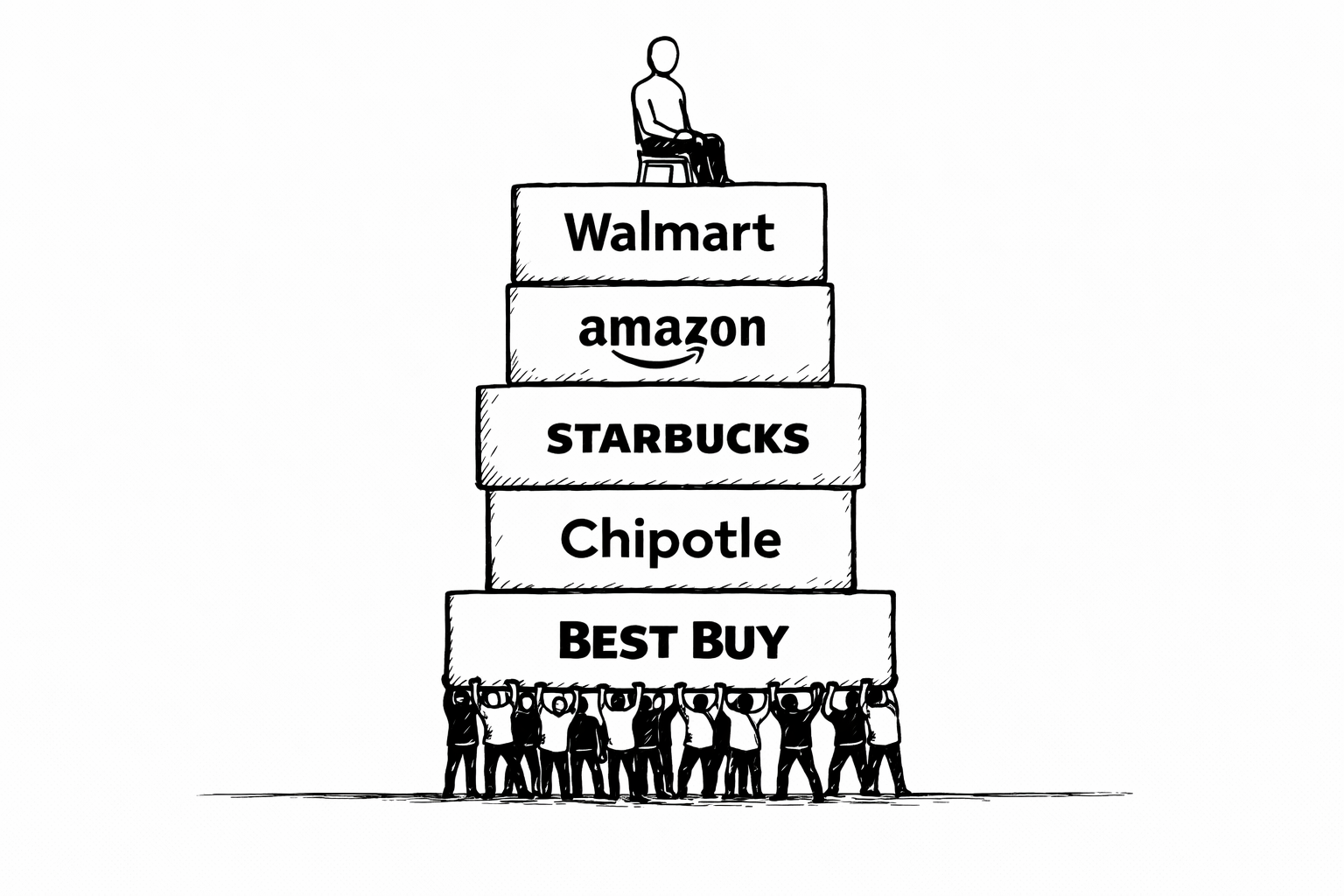
Amazon. Walmart. Target. Kroger. Best Buy. Chipotle. Starbucks. These are not struggling companies. They are among the most recognizable brands in the country — and according to a new report from the Institute for Policy Studies, they are also among the largest low-wage employers in America, paying what researchers describe as poverty wages to millions of workers.
The gap isn’t subtle anymore. It’s structural.
Together, the companies identified in the report employ roughly 6.7 million people. Yet even among the highest-paid workers in this group, median wages fail to cross $48,000 — a threshold that increasingly struggles to cover basic living costs in many parts of the country.
Consider what that looks like in practice. A full-time worker at one of these companies — stocking shelves, running a register, fulfilling warehouse orders — clears maybe $800 to $900 a week before taxes. In most major metros, that doesn’t cover rent. It doesn’t absorb an unexpected medical bill. It doesn’t leave much room for anything beyond survival. These aren’t people who opted out of the labor market. They showed up. They’re working.
Executive compensation has moved in the opposite direction. CEO pay has surged more than 1,000% since 1978, with today’s executives earning on average 281 times more than the typical worker — not just a widening gap, but a redefinition of how value is distributed inside major corporations.
This isn’t confined to one industry. Retail, food service, logistics, and consumer-facing businesses dominate the list — sectors that form the backbone of everyday economic activity. The same companies people rely on for groceries, employment, and daily services are also setting the lower boundary of wages across the labor market.
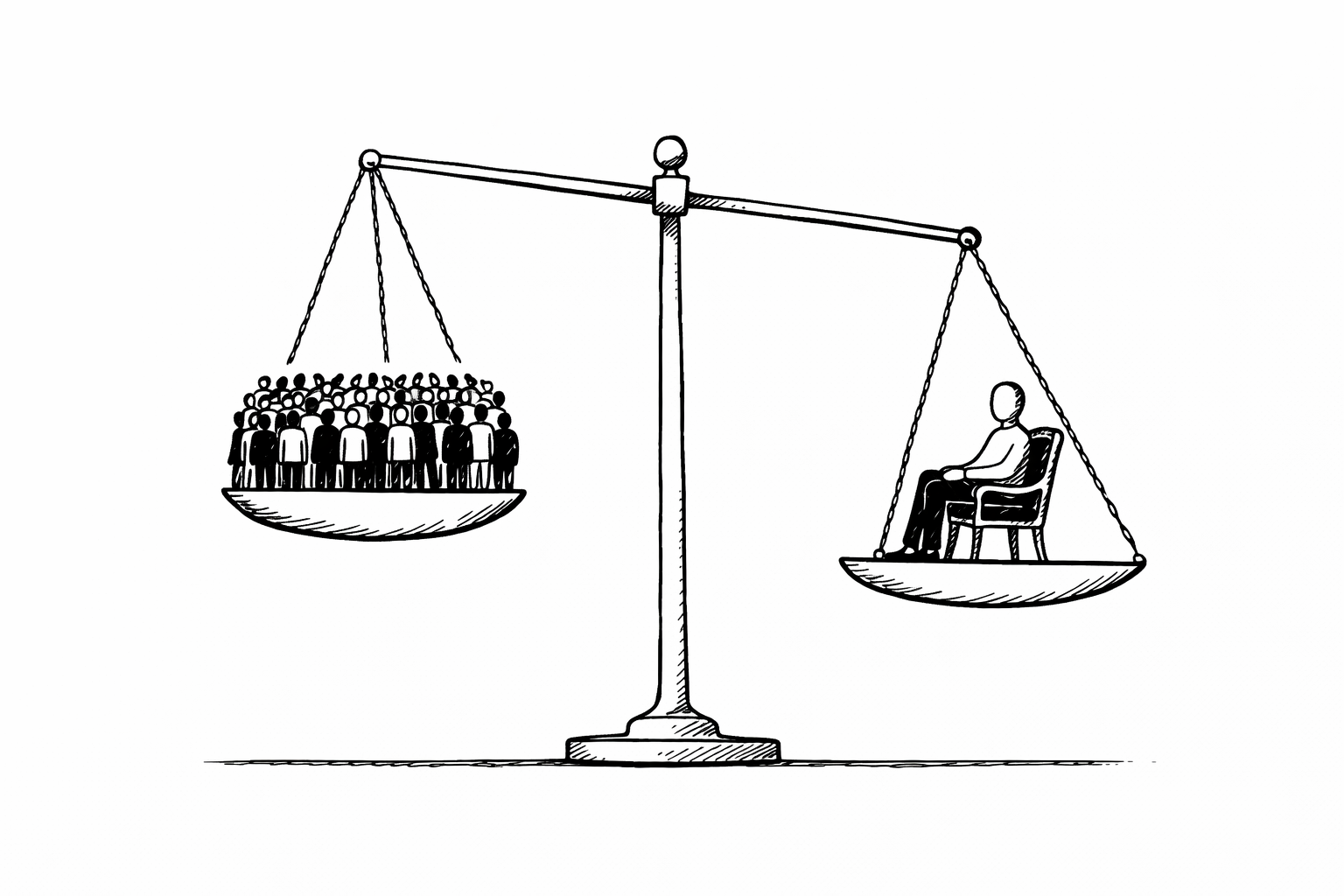
The tension is built into the model. Large-scale employers benefit from volume — of customers, of transactions, and of labor. But that scale also creates pressure to control costs, and wages remain one of the most flexible levers. The outcome is a system where growth and profitability expand alongside stagnant worker pay. As we’ve covered in When the Economy Slows , the pressure doesn’t disappear when the economy grows — it just becomes easier to ignore.
That pressure has become harder to ignore as cost-of-living costs rise. Housing, healthcare, and basic goods have all increased in price, amplifying the gap between what workers earn and what they actually need.
The report doesn’t introduce a new problem. It quantifies an existing one.
Why This Matters
This isn’t just about wages. It’s about how the economy is structured.
Work no longer guarantees stability. Millions of people are employed by some of the largest, most recognizable companies in the country — and still fall short of earning enough to meet basic needs. That challenges one of the core assumptions of the labor market: that participation leads to security.
The gap is widening at both ends. As executive compensation accelerates and worker wages stagnate, the distance between decision-makers and the workforce grows. That gap isn’t just financial — it shapes priorities, incentives, and how companies define success.
Low wages don’t stay contained. When large employers set the floor for pay, the effects ripple outward. They influence entire industries, local economies, and public systems — including increased reliance on government assistance programs to fill the gap.
This is a scale problem. The companies named in the report aren’t marginal players. They are central to how Americans shop, eat, and work. When wage structures at that level fail to keep pace with living costs, the impact isn’t isolated. It becomes systemic.
The takeaway: The modern economy isn’t just producing inequality. It’s organizing around it.