
Part of Structural Reality — an ongoing series examining the systems, policies, and decisions that shape everyday life for Black and Brown communities in America and around the world.
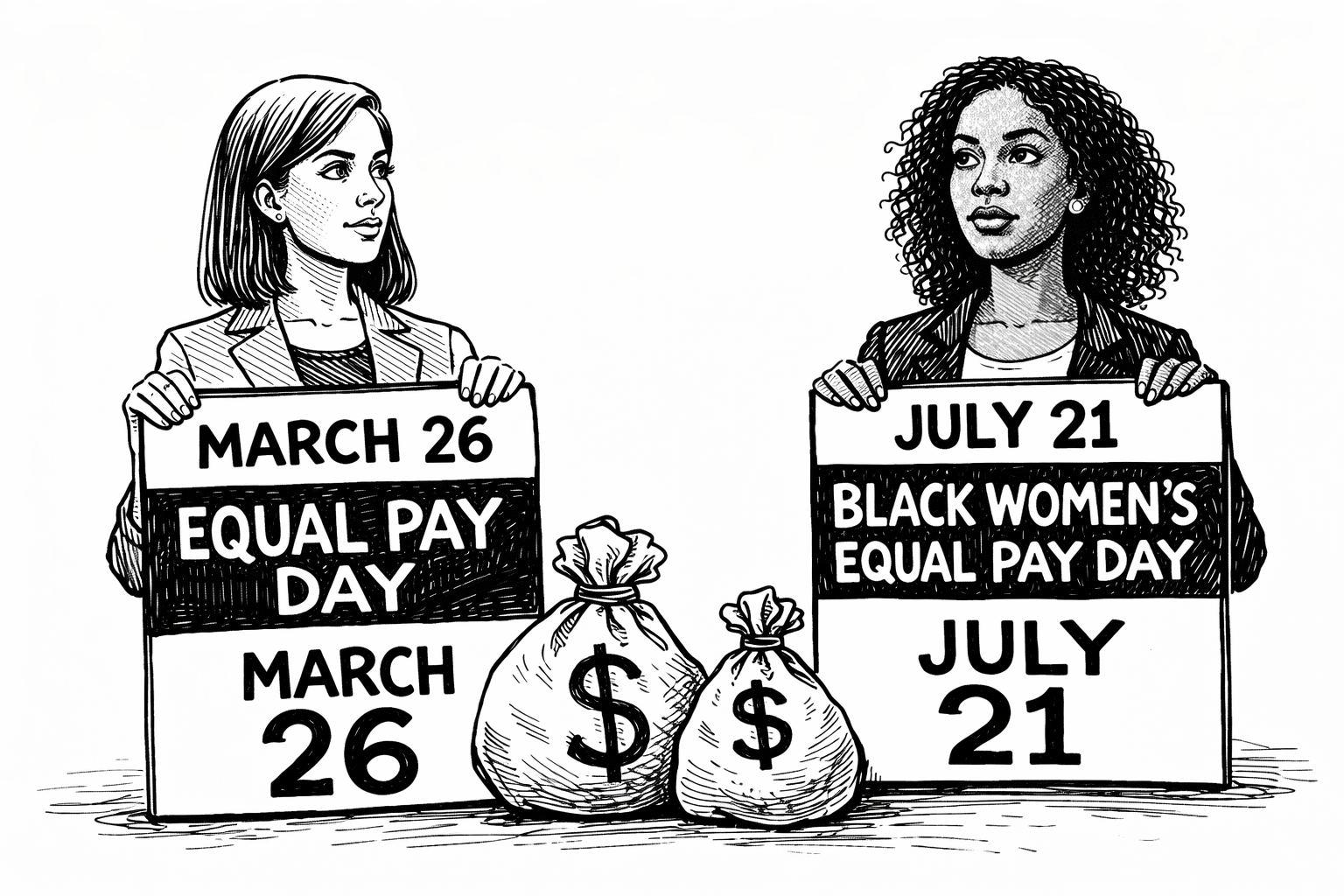
Yesterday was Equal Pay Day — the date marking how far into the new year women must work to match what men earned the year before. This year it fell on March 26, one day later than 2025. That single day of regression is not a rounding error. It is a data point in a two-year trend that the Census Bureau confirms is the first consecutive widening of the gender wage gap since the 1960s. Women working full-time now earn 81 cents for every dollar men earn, down from 83 cents the year prior and 84 cents the year before that. Men’s median income grew 3.7% between 2023 and 2024. Women’s median income was stagnant.
Those numbers are bad. The numbers for Black women are worse. Black women earn 68.3 cents for every dollar earned by white men — a gap of nearly $10 per hour, translating to roughly $20,500 less per year for a full-time worker. Black Women’s Equal Pay Day will not arrive until July 21. That means Black women must work nearly seven months into 2026 just to match what white men earned in 2025. That is not a pay gap. That is a structural tax on Black female labor that compounds annually, erodes retirement savings, shrinks Social Security checks, and limits the ability to build generational wealth — all while the enforcement tools designed to address it are being removed.
The Office of Federal Contract Compliance Programs — the agency that audited pay practices of major companies and obtained hundreds of millions of dollars in compensation for women and minorities who suffered wage discrimination — has been gutted. The Trump administration has ordered federal agencies to stop enforcing disparate impact liability, the civil rights legal concept central to wage discrimination cases against major employers. Federal pay transparency legislation, which would have required employers to disclose salary ranges in job postings and banned them from seeking candidates’ pay histories, failed to pass Congress. The pattern is consistent: the gap widens, and the mechanisms built to close it disappear.
As The Pay Gap Isn’t Closing — It’s Holding documented, Black women are among the most educated groups in the country — yet that educational investment does not translate into comparable earnings. They earned a median of $942 per week in 2025, less than both white women and men across racial groups, with unemployment rates consistently higher than those of white women. Education is not the equalizer it is assumed to be. The structure of the labor market, not just individual preparation, determines where people land within it — and until that changes, growth will continue to register in the data while leaving its underlying inequality intact. As The Reference Letter Is Dead — Now What? examined, the informal networks and institutional relationships that govern professional mobility have never been equally distributed, which means the people who need enforcement tools the most are the ones watching those tools disappear.
Equal Pay Day is an observance. July 21 is an indictment. We are marking the wrong date.