
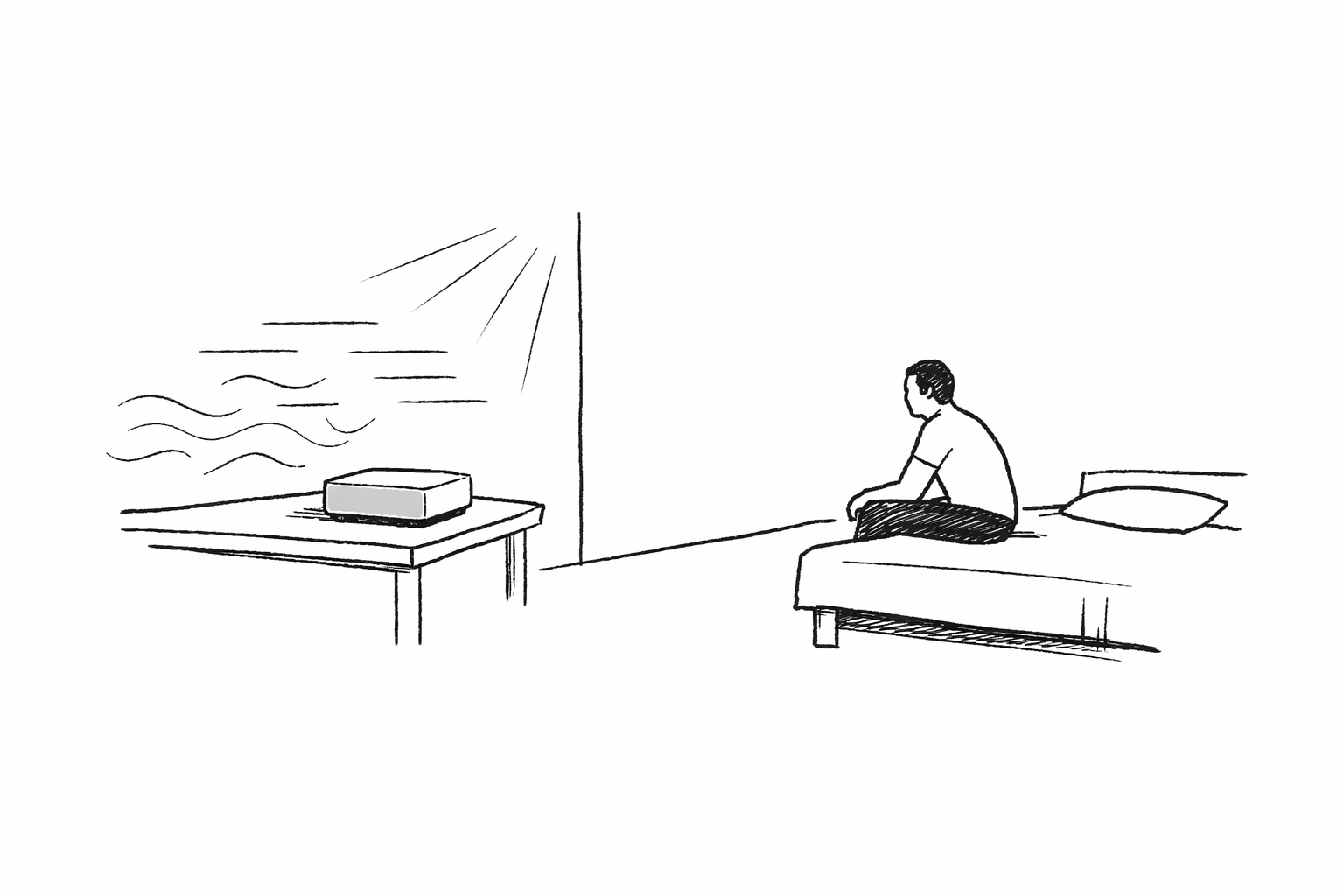
The next phase of health tracking is moving beyond the body. Ultrahuman Home, the company’s newest device, shifts the focus from measuring biological signals to monitoring the environment itself — air quality, light exposure, temperature, humidity, and ambient noise. It’s a logical extension of the wearable ecosystem: if devices like smart rings track how your body responds, the home begins to track what it’s responding to.
On paper, the system is comprehensive. Ultrahuman Home measures everything from particulate matter and carbon dioxide levels to blue light exposure and nighttime noise disruptions. Paired with the company’s ring through its UltraSync feature, the device attempts to connect cause and effect — linking environmental conditions to sleep quality, recovery, and overall health metrics. The pitch is straightforward: not just data about you, but data about the conditions shaping you.
But the distinction between insight and impact matters. Ultrahuman Home does not change the environment it measures. It doesn’t filter the air, adjust the temperature, or control lighting conditions. It identifies problems and surfaces correlations — then leaves the response to the user. Early reviews suggest those insights often remain basic, amounting to reminders to improve ventilation or reduce noise, reinforcing that the system expands awareness without meaningfully resolving it.
At roughly $400 to $550, that gap becomes harder to ignore. The value proposition depends on what happens after the data is delivered. If a spike in carbon dioxide is affecting sleep, the solution may require better ventilation, new equipment, or changes to a living space that isn’t easily modified. The device assumes a level of control over one’s environment that is not evenly distributed. Many of the device’s more advanced features remain in development, positioning it less as a finished system and more as an early-stage layer in a broader ecosystem that has yet to fully materialize.
That’s where the product moves beyond technology and into structure. The promise of environmental optimization — cleaner air, better sleep conditions, reduced exposure to disruptive inputs — becomes another layer of advantage. For users who can act on the data, the system becomes a tool for refinement. For those who can’t, it becomes a clearer view of constraints they don’t have the ability to change.
This is the direction the category is heading. Health tracking is no longer just about capturing what the body is doing. It’s about mapping the environment around it. The next step is obvious: systems that don’t just observe conditions, but actively adjust them. That future isn’t here yet. What exists now is a growing stack of insight — and a growing expectation that individuals will be responsible for acting on it.
The shift is subtle, but it’s already underway. Health is no longer just something you manage internally. It’s something increasingly shaped by the spaces you live in — and your ability to control them.