
Structural Reality is a series examining how systems produce unequal outcomes across work, income, and opportunity.
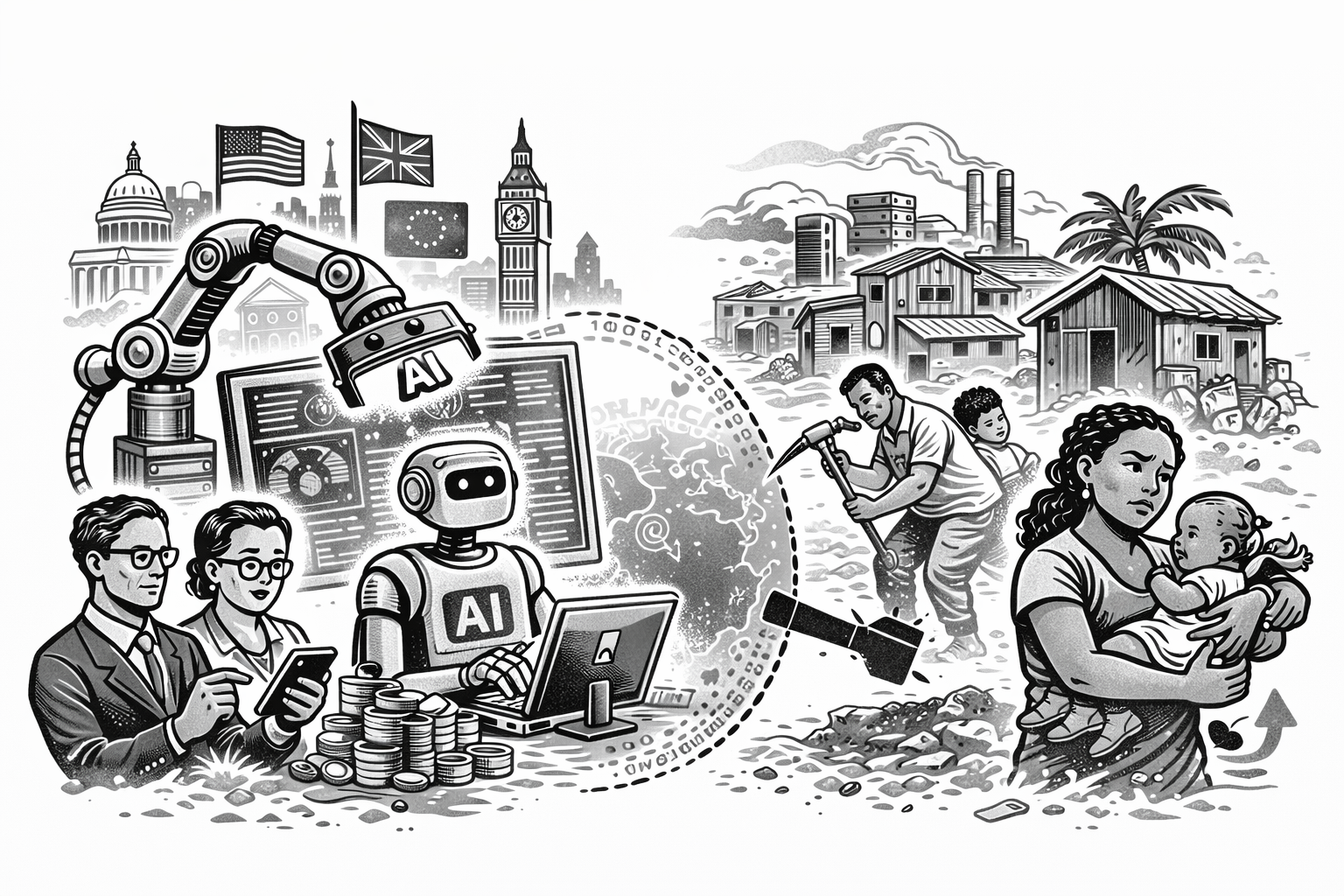
Artificial intelligence is being described as the most transformative technology in human history. The question nobody is asking loudly enough: transformative for whom? The countries designing AI systems, setting the norms, and capturing the economic gains are not the same countries living with the downstream consequences. Systems trained predominantly on Global North data — reflecting its labor markets, social categories, and cultural assumptions — are being deployed worldwide without accountability traveling with them.
The EU AI Act mandates labeling of AI-generated content from August 2026, with fines up to 6% of global revenue — but regulatory frameworks like this exist where institutional capacity exists. The Global South, most exposed to AI-driven labor disruption and algorithmic bias, has the least voice in how these systems are governed. Most current AI models are developed and trained predominantly on U.S. and European data — which means the assumptions embedded in those systems travel globally, even when the contexts they enter are fundamentally different. A hiring tool calibrated to American corporate norms doesn’t become neutral when it’s deployed in Lagos or Nairobi. The assumptions travel. The accountability does not. That’s not a technical gap — it’s a political one, and it deserves to be named as such.