
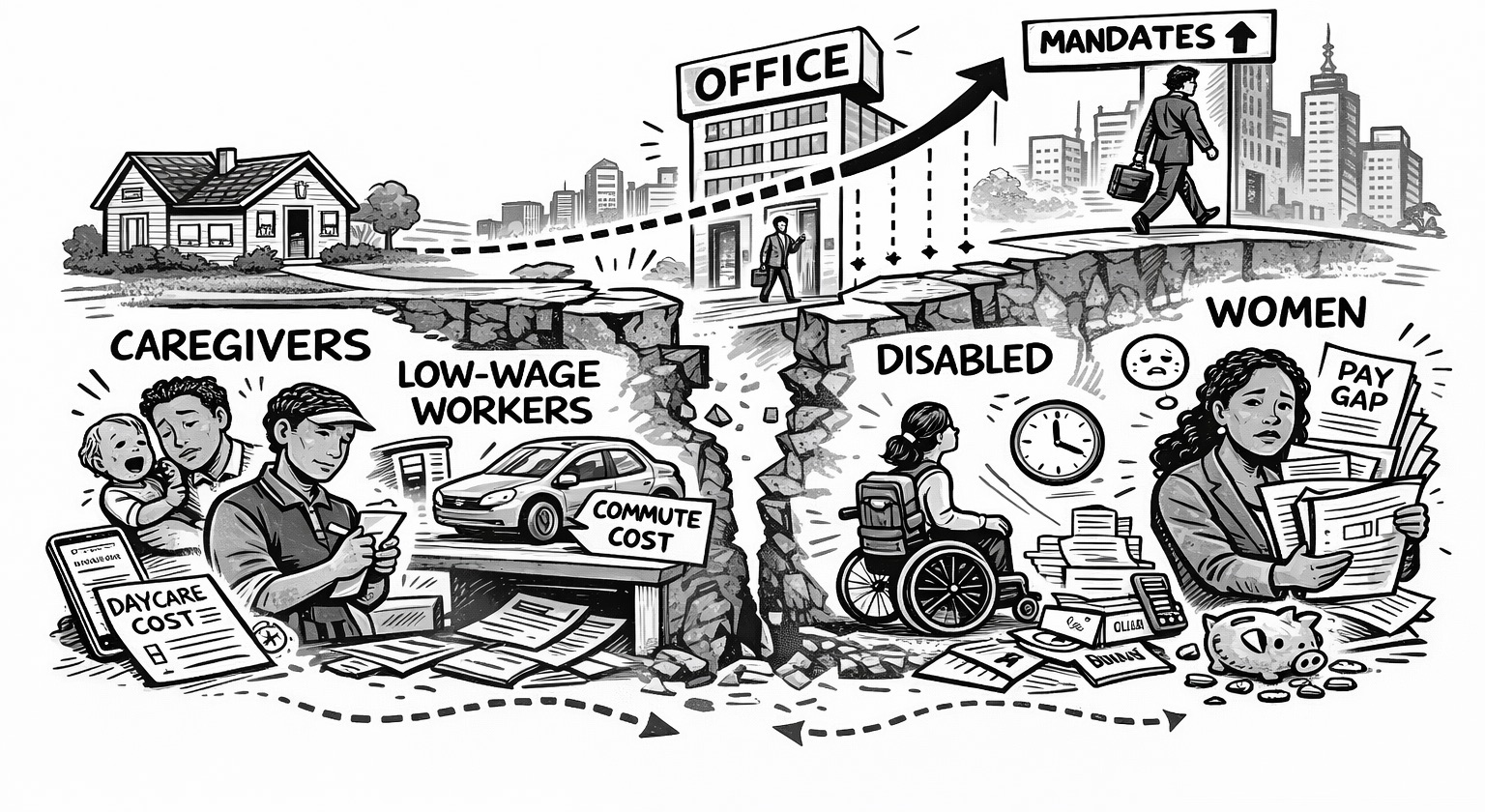
The return-to-office (RTO) wave is real. Nearly half of all companies will require employees to be in the office at least four days a week in 2026, with 28% phasing out remote work entirely. The justification is familiar — collaboration, culture, productivity. The evidence supporting it is not. What is clear is who absorbs the cost.
RTO mandates disproportionately affect women, caregivers, employees with disabilities, and lower-wage workers — the same groups for whom remote work opened doors the traditional office often kept closed. Some experts have noted that many organizations are using RTO mandates as a mechanism to reduce headcount indirectly, avoiding the financial and reputational costs of formal layoffs. What’s being sold as a cultural reset is functioning, for many workers, as a quiet exit ramp. Flexibility is being taken back from the people who needed it most — and as we explored in The Pay Gap Isn’t Closing — It’s Holding, the structural disadvantages compounding inside the workplace don’t disappear when the policy changes. They deepen.