
Structural Reality is a series examining how systems produce unequal outcomes across work, income, and opportunity.
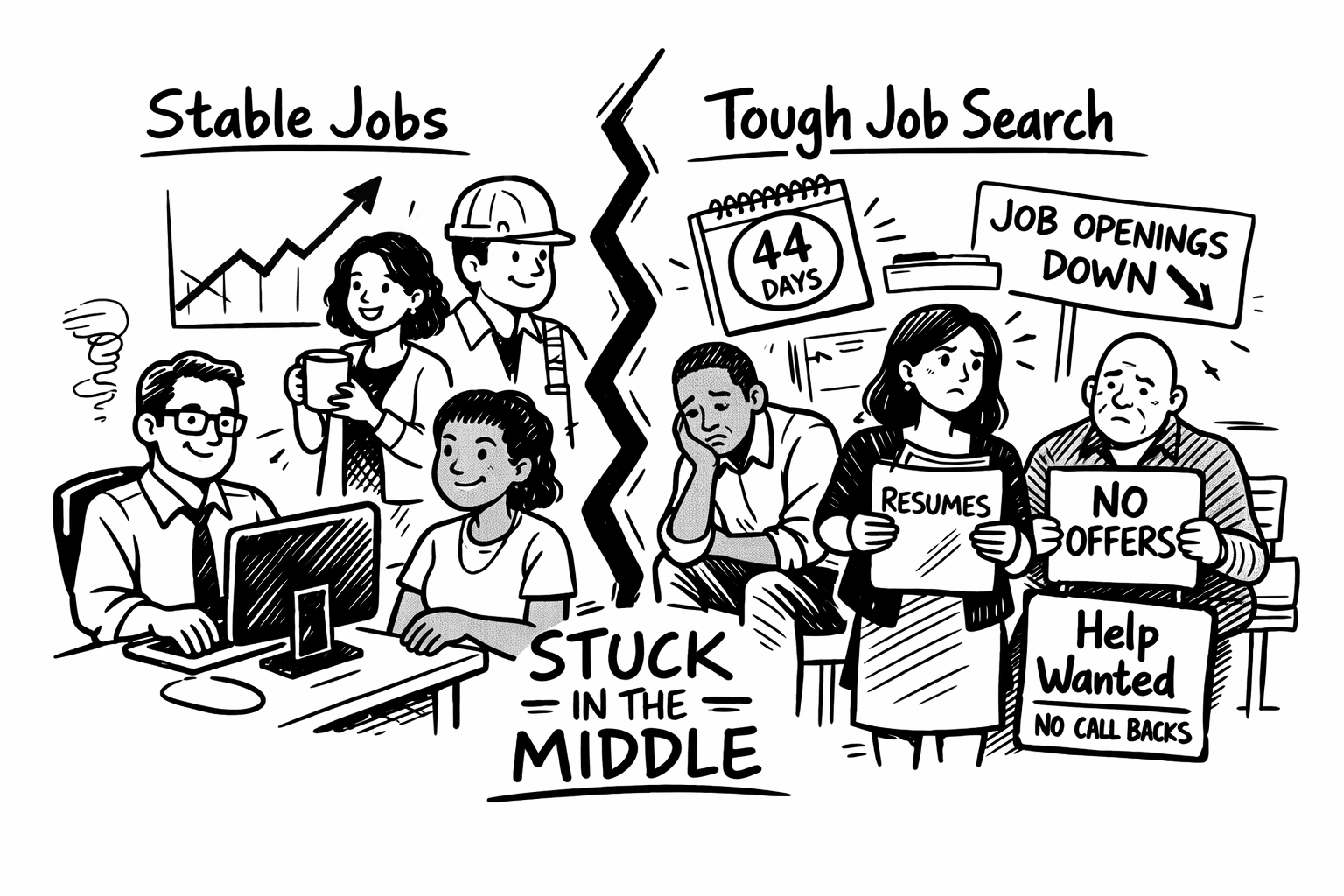
The labor market looks fine on paper. Layoffs remain historically low — initial jobless claims fell to 205,000 for the week ending March 14, well below analyst expectations of 215,000. But low layoffs and a healthy job market aren’t the same thing. Job openings have dropped to 7.6 million from a peak of 12.2 million, and the average time-to-hire has stretched to 44 days. Employers are holding onto their workers. They’re just not adding new ones.
Economists have a name for it: the “low-hire, low-fire” state — where unemployment stays low, but those out of work struggle to find something new. It’s a bottleneck, not a collapse. Opportunities exist, but they’re slower to materialize, more competitive, and often require more compromise than the headline numbers imply.
The deeper issue is what this dynamic conceals. Traditional indicators flag extremes — mass layoffs, unemployment spikes, rapid growth. They’re less equipped to capture a market that is stable but quietly tightening. That friction isn’t evenly distributed either. As we explored in The Pay Gap Isn’t Closing — It’s Holding, structural inequities tend to deepen in exactly these conditions — when movement slows, those already navigating systemic barriers feel it first.
The labor market isn’t breaking. But for workers trying to move, advance, or re-enter, stability is starting to feel a lot like stagnation.