
Part of The Access Shift — an ongoing series examining how access is being quietly reshaped across American life.
It has never been easier to reach someone. Whether that reaches them is a different question.
Messages land in seconds. Conversations stretch across entire days through text threads. Notifications keep people in continuous proximity to one another. By every visible measure, communication has never been more active. And yet something in the actual experience of connection has shifted — quietly, gradually, in a direction that metrics don’t capture well.
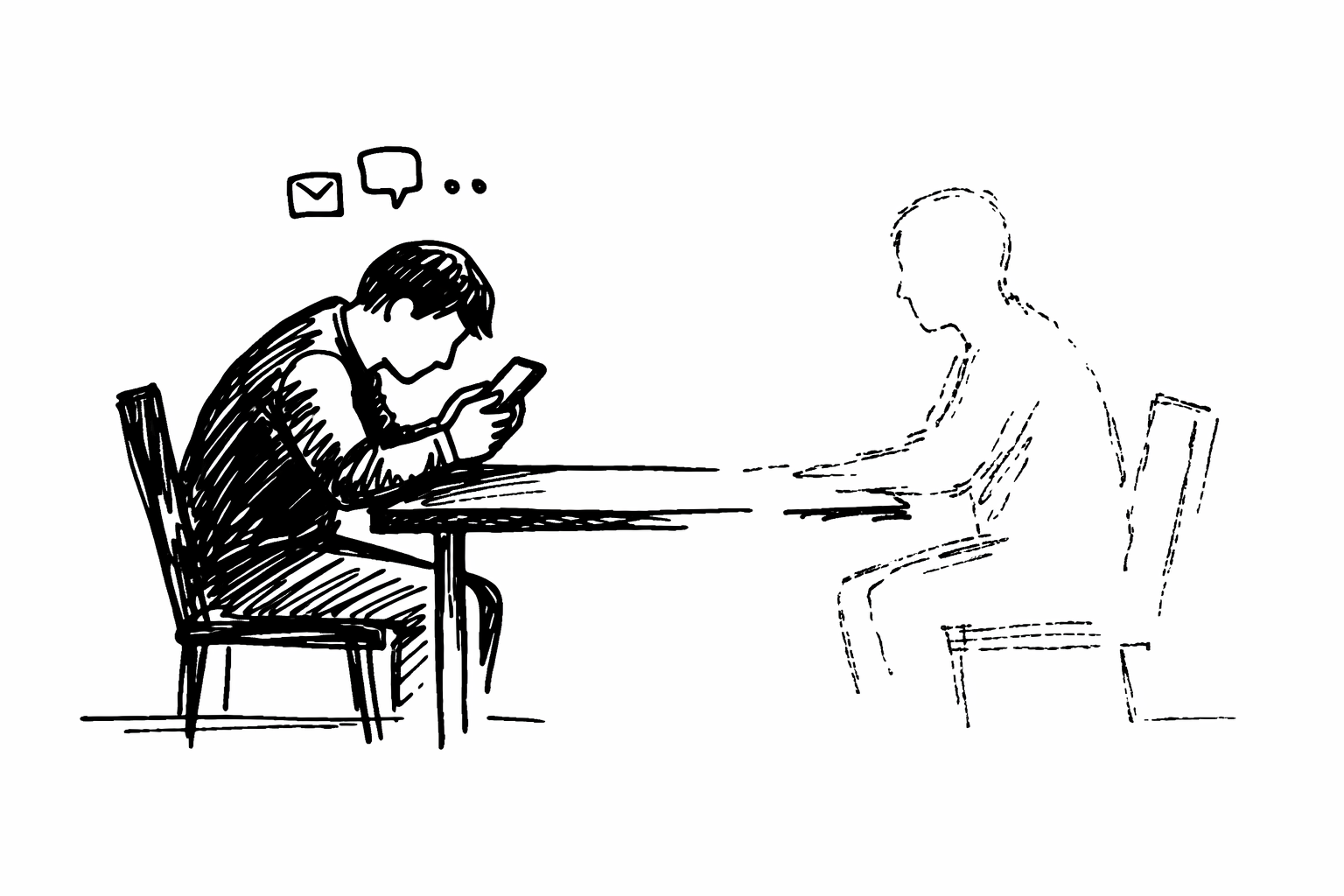
Availability is not the same as presence. A message can be answered within seconds while the attention behind it is divided three ways. Conversations move in fragments — interrupted mid-thought, layered between tasks, running in parallel with a dozen other exchanges. A 2023 study from the University of California, Irvine found that it takes an average of more than 20 minutes to fully refocus after a digital interruption. Most people are interrupted far more often than that. The math means that sustained attention, in most digital communication, is the exception rather than the expectation.
What that produces is a particular texture of relationship — interactions that feel ongoing but rarely go deep. A continuous stream of check-ins, reactions, and quick responses creates the appearance of closeness without the weight of it. Proximity gets mistaken for connection. Interaction doesn’t always translate into relationship. The rhythm is constant; the experience often feels incomplete.
Over time, this creates a specific kind of fatigue. Not the absence of communication — the overabundance of it, distributed too thinly to mean much. Conversations linger without resolution. Emotional energy fragments across dozens of small exchanges rather than gathering around a few that matter. A 2024 Pew Research Center survey found that nearly 40 percent of adults report feeling overwhelmed by the volume of messages and notifications they receive — even as they continue to structure their daily lives around digital communication. Something is always active. Not much of it is fulfilling.
Technology didn’t create the need to connect. It reshaped how that need gets expressed — and introduced a new expectation alongside it: that availability should be constant, that response should be immediate, that presence can be maintained through volume. In practice, that expectation competes directly with the reality of attention, which hasn’t expanded to match the infrastructure built around it. Access has never been broader. Presence has become more rare.
What gets lost in a system optimized for interaction is the thing that interaction is supposed to produce. Connection — the kind that actually registers — requires sustained attention. Not frequency. Not responsiveness. Attention, held long enough to mean something. That kind of attention is harder to manufacture, harder to sustain, and increasingly, harder to find.
The question worth sitting with is not whether people are communicating. It’s whether, beneath all the activity, they are actually reaching each other.