
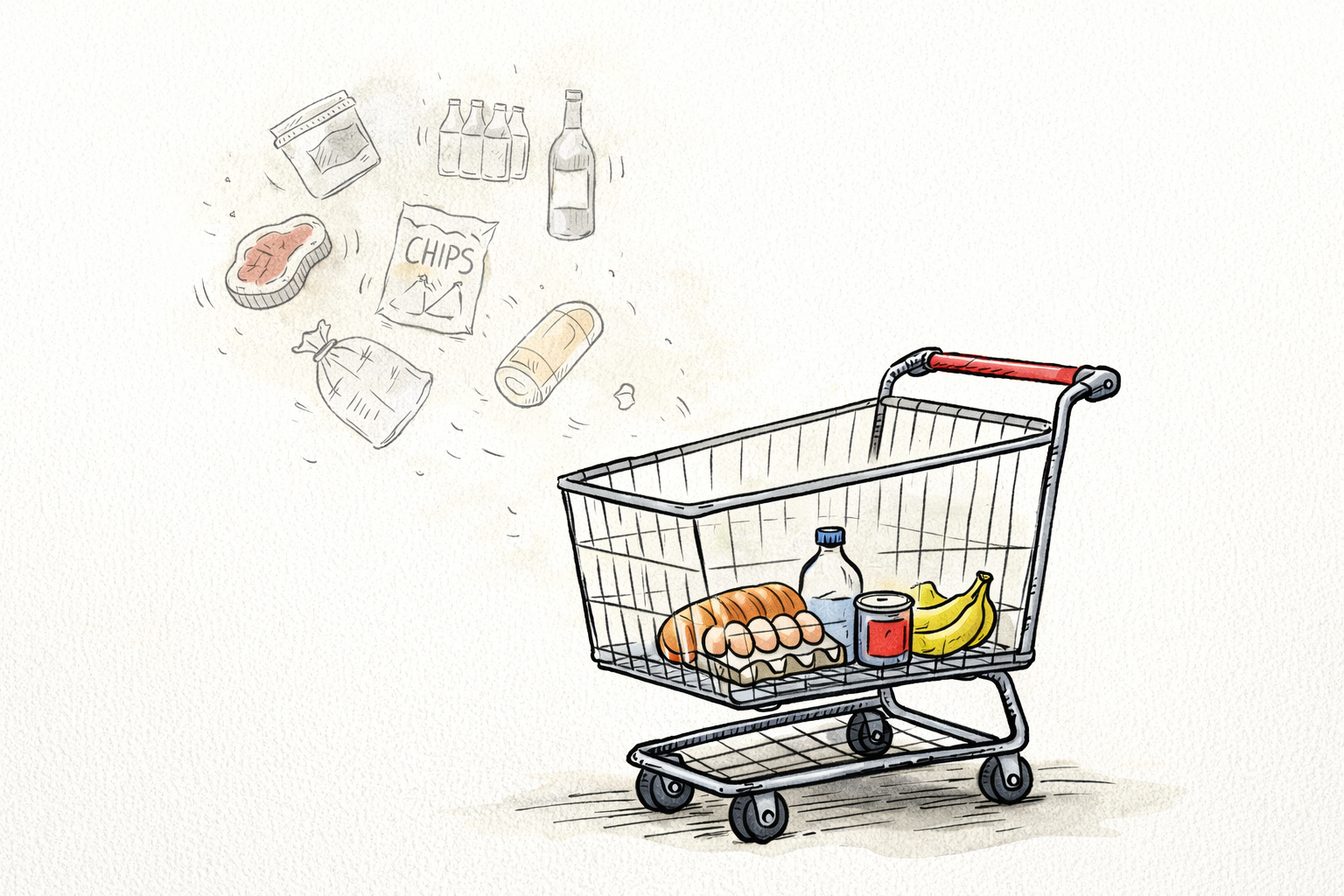
It’s not just that groceries cost more. It’s that certain items are no longer making it into the cart at all.
The shift is subtle at first. A brand gets swapped for a cheaper alternative. A few items get put back before checkout. Over time, the changes become more deliberate. Some purchases aren’t postponed—they disappear entirely. What once felt automatic now requires calculation.
This isn’t about a single shopping trip for many households. It’s about accumulation. Benny, a media relations consultant, described how his grocery budget has changed over the past few years. What used to cost him roughly $200 every two weeks now averages between $315 and $350 for the same items. To compensate, he has cut back elsewhere—canceling subscriptions, pausing a wellness membership, and reviewing his spending more closely. The adjustment isn’t just financial. It’s behavioral. Decisions that once required little thought now carry weight.
Part of what’s driving this shift is how inflation works over time. Prices that rise during periods of high inflation rarely return to previous levels. According to U.S. government data, food prices increased more than 20 percent between 2020 and 2024, effectively resetting the cost of everyday items. At the same time, wage growth has not kept pace, narrowing the margin between income and expense. The result is not just higher prices, but less flexibility.
The effects extend beyond individual households. Restaurants are adjusting portion sizes or raising prices, while grocery stores expand store-brand options as more consumers look for lower-cost alternatives. Across the board, the expectation is changing—not just what things cost, but what people are willing or able to buy. What was once a matter of preference is increasingly a matter of constraint. Choice narrows. Flexibility decreases. The shift doesn’t announce itself all at once; it shows up in small decisions—what stays, what goes, what gets replaced. Over time, those decisions add up to something larger, reshaping what everyday life includes and what it leaves behind.
Series: The Access Shift
The gradual redefinition of who systems are designed to serve.
Across sectors—from public infrastructure to healthcare to everyday spaces—access is no longer assumed. As costs rise and systems face increasing pressure, services once built for broad reach are becoming more selective, more conditional, and less universal. The Access Shift explores how these changes are unfolding in real time—and what they reveal about who is included, who is left out, and how the structure of everyday life is quietly being reshaped.Thanks for reading Social Storytellers Collective! Subscribe for free to receive new posts and support my work.