
NEWS DESK | VOICES OF THE COLLECTIVE
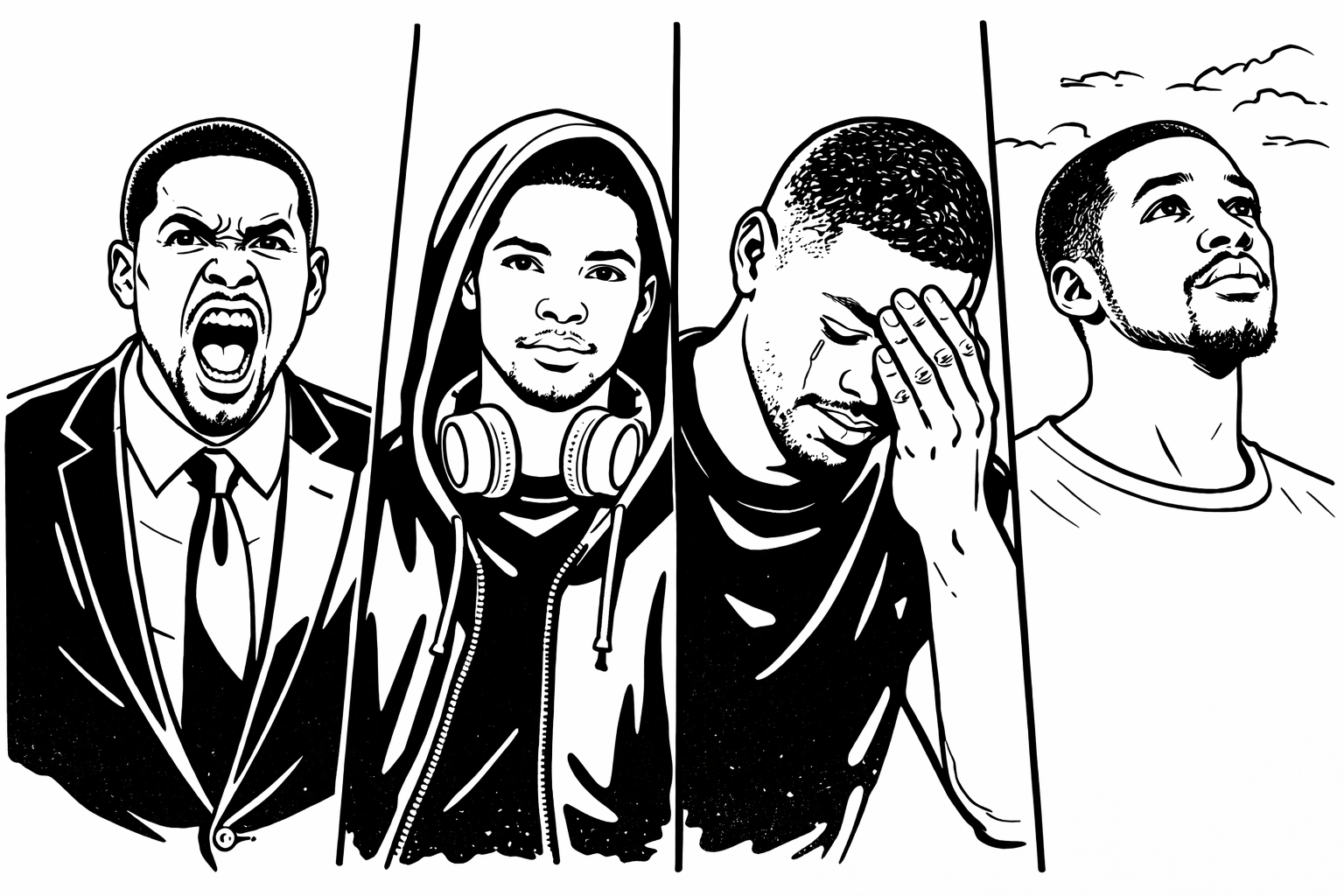
American culture teaches boys early what masculinity is supposed to look like. Strength is associated with emotional control, confidence is expected to appear constant, and vulnerability is often discouraged. By adulthood, many men have internalized the idea that masculinity must be demonstrated through composure and certainty—even during moments when those feelings are not actually present.
These expectations can be particularly complex for Black men, whose identities have long been shaped by both cultural expectation and historical stereotype. The concept of hypermasculinity—emphasizing toughness, emotional restraint, and dominance—has often been reinforced through media narratives that reduce Black men to narrow definitions of strength. The consequences appear in measurable ways. According to the National Institute of Mental Health, men account for nearly 80 percent of suicide deaths in the United States, despite being significantly less likely than women to seek mental health support. At the same time, research from the Centers for Disease Control and Prevention shows that suicide rates among Black men and boys have been rising in recent years, prompting renewed conversations about emotional wellbeing and help-seeking behavior.
When masculinity becomes something that must constantly be demonstrated, it can create distance between what men feel internally and what they believe they must present to the world. Many learn to project certainty even when they are uncertain, to appear strong when they are overwhelmed, and to process hardship privately rather than seek support. Within that framework, vulnerability can begin to feel like a threat to perceived masculinity—something that risks undermining the image many men believe they are expected to maintain.
That tension is explored powerfully in Bryson Davis’s Unmasking the Self: Shadow Work for Black Men on the Path to Wholeness, which argues that many Black men are conditioned to wear invisible masks that project strength, control, and toughness while burying fear, grief, and pain. In that sense, masculinity can become less about identity and more about performance. A similar thread appears in Will Davison’s The Silent Work essay “The Dignity of Needing Help,”which reflects on how many Black men are taught to view openness as dangerous and self-sufficiency as the measure of manhood. Together, both pieces point to the same truth: emotional suppression may look like strength from the outside, but it often comes at the expense of healing.
Reframing masculinity requires expanding the definition of strength itself. Emotional awareness, honesty, and the ability to ask for help are not weaknesses but signs of maturity and resilience. When men move beyond performing strength and begin experiencing it through authenticity and connection, they create space for healthier relationships and stronger communities. Sometimes the most powerful expression of masculinity is not standing alone—but allowing others to stand beside you.