
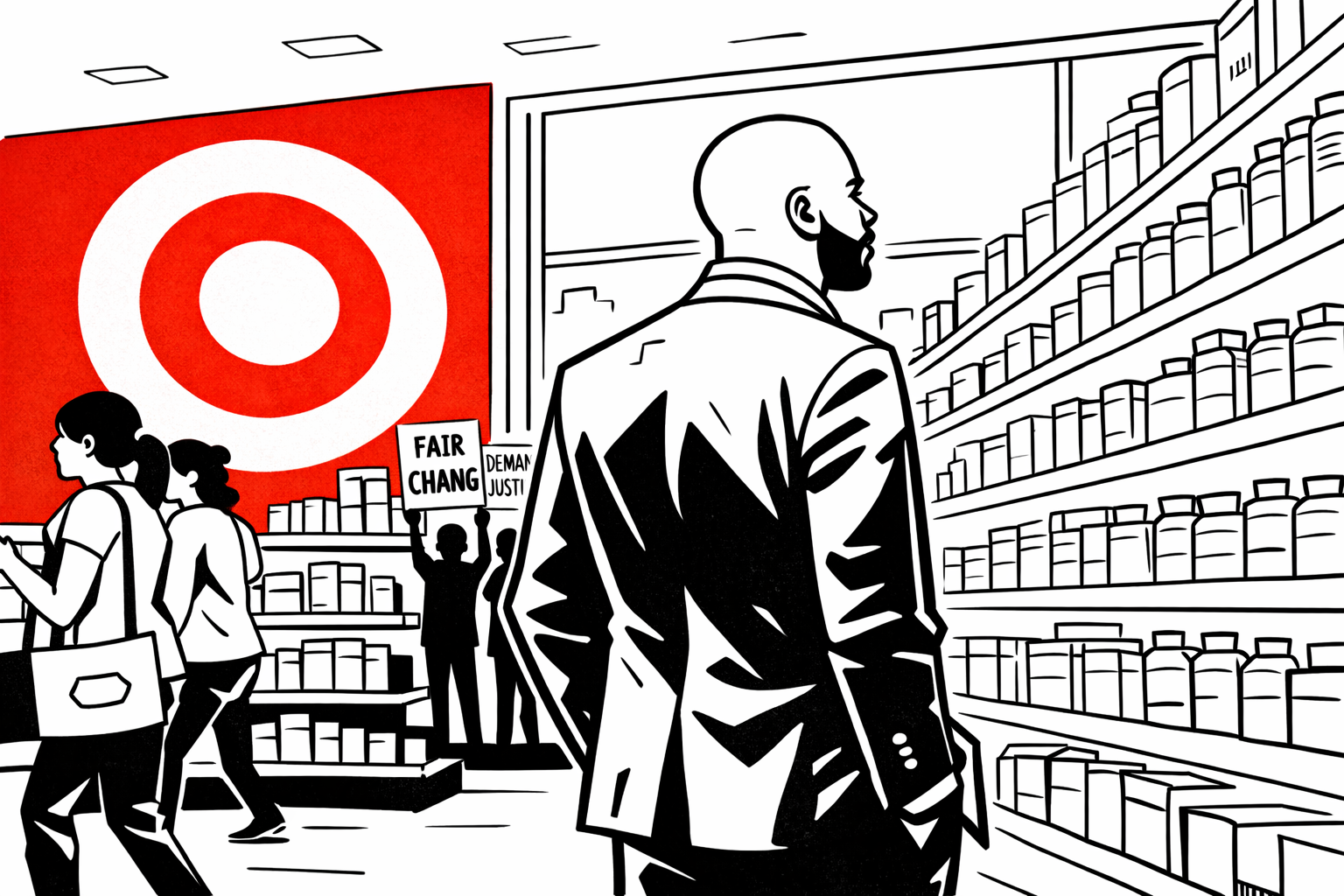
For the past year, one of the most visible economic statements circulating through Black America was simple: stop spending money at Target. What began as frustration over corporate decisions quickly evolved into something larger—a conversation about accountability, representation, and whether companies that benefit from Black consumers are willing to stand behind the commitments they make to our communities.
The boycott gained national attention in part because it tapped into a long tradition of economic activism. Collective spending power has historically been one of the few levers marginalized communities could reliably pull to demand attention from institutions that might otherwise ignore them. When people organize around where they spend—or refuse to spend—the message travels quickly.
Like many Black churches, my own pastor aligned with the call from Jamal Harrison Bryant to boycott Target. The message moved quickly through church communities and social networks, and participation became a shared understanding among many congregants who saw the boycott not simply as a protest, but as an exercise in economic discipline.
For years, Target had been part of my normal monthly routine. I would typically stop in to purchase essentials and household cleaning products, often spending somewhere around $150 each month without giving it much thought. When the boycott began, I stopped going. At first it was inconvenient. Target had become a place many consumers relied on for one-stop shopping. But over time the inconvenience faded and I adjusted my habits. What once felt like a routine errand quietly disappeared from my monthly spending.
What struck me most during that time was how unified the sentiment seemed across Black communities. It even became fodder for community banter. If someone mentioned stopping by Target, friends might playfully chastise them for crossing the boycott line. The humor was lighthearted, but underneath it was a shared awareness that people were trying—however imperfectly—to move in the same direction.
There was also a noticeable sense of satisfaction whenever news reports suggested the boycott might be affecting the company’s sales. In many circles, those reports were shared and discussed with a certain amount of glee—not out of hostility toward the brand itself, but as validation that collective economic behavior still carried weight.
That personal shift made the broader conversation around the boycott feel less abstract. Economic activism only works when individual behavior changes, and for many people that meant intentionally redirecting where they spent their money.
Recently, the pastor and activist Jamal Harrison Bryant announced that the boycott of Target would end. According to Bryant, months of sustained pressure led the company to reaffirm financial commitments to Black-owned businesses, expand opportunities for Black brands in its stores, and increase spending with Black-owned marketing and construction firms. In his view, the campaign achieved what it set out to do.
Yet the response from other activists has been far less celebratory. Some argue that the deeper concerns that sparked the boycott—particularly around diversity and equity initiatives—were never truly resolved. Others question whether the concessions being highlighted now actually represent meaningful structural change.
That disagreement reveals something important about movements built around economic pressure: victory is rarely defined the same way by everyone involved.
For some people, the fact that a major corporation returned to the negotiating table is evidence that the boycott worked. Corporate attention, after all, is often the first step toward change. Others believe that success should only be declared when the original commitments are fully restored or when the structural issues that sparked the protest have been meaningfully addressed.
Both perspectives speak to a deeper reality. Economic activism is powerful, but it is rarely neat or unanimous. Movements are made up of individuals with different expectations, different thresholds for progress, and different ideas about what accountability should look like.
What this moment ultimately reveals is not simply a disagreement about Target. It reflects a broader question about how communities use their economic influence in an era when corporations increasingly find themselves pulled into cultural and political debates. Companies respond to pressure, but they also navigate competing expectations from shareholders, customers, and political actors. The result is often a set of compromises that satisfy some people while leaving others deeply frustrated.
That tension does not necessarily weaken the underlying movement. If anything, it highlights how seriously people take the question of corporate responsibility. Beneath the headlines and social media arguments is a recognition that Black consumers represent enormous economic power, and that power has historically been underestimated.
From a public relations perspective, moments like this reveal how high the stakes have become for corporate communications teams. In an earlier era, brand crises were often tied to defective products, executive misconduct, or operational failures. Today, many of the most volatile corporate controversies are rooted in cultural expectations and social values. That makes them far more difficult to navigate because the audience is not responding to a single mistake—it is responding to competing interpretations of what the company represents.
When organizations find themselves in the middle of that kind of controversy, the instinct is often to retreat into silence or to issue carefully worded statements that attempt to satisfy everyone at once. In practice, those approaches rarely work. Silence creates a vacuum that critics fill with their own narratives, while vague messaging signals uncertainty and weakens credibility with stakeholders who are paying close attention.
The most effective crisis responses tend to follow a few consistent principles. First, organizations must acknowledge concerns directly rather than minimizing them. Communities are far more likely to engage constructively when they feel heard, even if they disagree with the ultimate outcome. Second, companies need to communicate concrete actions rather than abstract commitments. Promises about future intentions rarely carry the same weight as clear steps that people can measure and evaluate over time.
Just as important is consistency. Corporate credibility is not built in the middle of a crisis—it is built in the months and years beforehand. Organizations that establish a pattern of honoring their commitments are far more likely to receive the benefit of the doubt when controversy arises.
The Target boycott highlights how difficult that balance has become. Companies are expected to demonstrate social awareness while simultaneously navigating intense political polarization. Every decision is interpreted through multiple lenses, and audiences often judge corporate behavior not only by what a company says but by what people believe it should have said.
In Target’s case, the moment felt particularly complicated for many observers. The departure of former CEO Brian Cornell last month raised its own set of questions about whether leadership changes were connected to the broader turbulence surrounding the company. At the same time, it was difficult not to notice how quickly the organization moved to scale back certain diversity and equity initiatives once external pressure intensified. For many people who had supported the brand in part because of those commitments, the speed of that retreat was deeply disheartening.
The larger issue now is what happens after the boycott ends. The real test of corporate accountability is rarely found in the announcement of new commitments. It is found months and years later in whether those commitments are honored quietly, long after public attention has shifted elsewhere.
Boycotts may begin with a clear demand. What follows is usually more complicated. Progress is debated, expectations evolve, and communities decide—sometimes uneasily—whether enough has changed to move forward.
In that sense, the most important question raised by the Target boycott may not be whether it succeeded or failed. The more enduring question is how Black economic influence will continue to shape corporate behavior in the future, and whether companies will treat that influence as temporary pressure or as a relationship that requires sustained respect.
For communications professionals and corporate leaders alike, that distinction matters. Consumer trust is rarely lost overnight, and it is almost never rebuilt through a single announcement. It is rebuilt through consistent actions over time—often long after the headlines fade and the boycott conversations move on to something else.
Will Davison Jr. is a strategic communications and public relations leader who writes about corporate reputation, cultural influence, and the intersection of race, media, and corporate responsibility.