
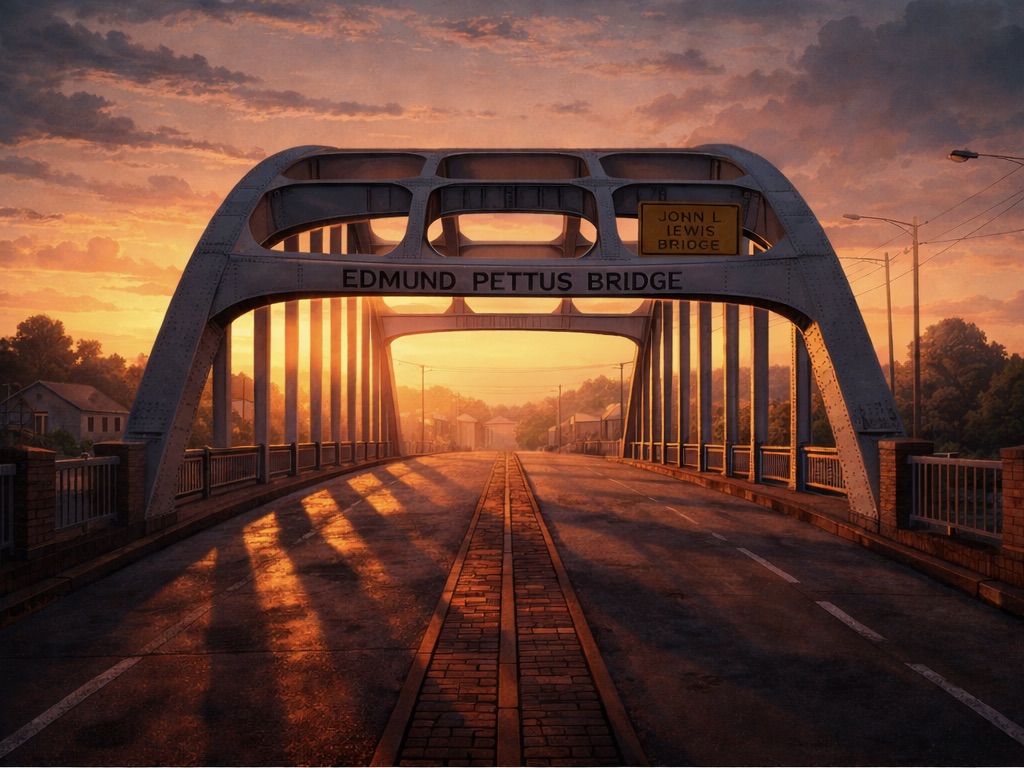
History does not live only in textbooks. It lives in the streets people marched through, the churches where communities gathered, and the institutions built by those determined to claim their place in the American story.
For Black Americans, history has often been preserved through persistence—the deliberate effort to ensure that stories once ignored, minimized, or erased remain visible for future generations. Across the United States, physical landmarks stand as witnesses to moments that reshaped the nation. The Edmund Pettus Bridge in Selma, Alabama, where peaceful demonstrators were met with violence during the 1965 voting rights marches, remains a symbol of courage and sacrifice. In Birmingham, the 16th Street Baptist Church stands as a solemn reminder of the young lives lost in a bombing that shocked the conscience of the nation and strengthened the call for civil rights legislation.
In Memphis, the Lorraine Motel—now the National Civil Rights Museum—marks the place where Dr. Martin Luther King Jr.’s life was taken while he continued advocating for economic and social justice. These sites are more than historic destinations. They are classrooms without walls, allowing visitors to stand where history unfolded and to understand that many of the freedoms enjoyed today were secured through extraordinary sacrifice and resilience.
The story of Black American history, however, is not only about protest and resistance. It is also about the communities that were built, the institutions that were created, and the economic independence that many fought to establish. In Tulsa, Oklahoma, the Greenwood District—often called Black Wall Street—once flourished as one of the most prosperous Black communities in the country before the devastating 1921 massacre destroyed homes, businesses, and lives. Today, preservation efforts seek not only to remember the tragedy but also to honor the thriving community that existed before it.
Other places tell quieter stories of self-determination. Eatonville, Florida—one of the first incorporated Black municipalities in the United States—stands as a reminder of a long tradition of Black governance and community leadership. In Houston, Freedmen’s Town carries a similar legacy. Founded by formerly enslaved people after the Civil War, the community became a place where newly freed citizens built homes, churches, and businesses while forging new lives in freedom. The brick streets laid by those early residents still remain, offering a tangible connection to the determination of a community that believed deeply in building opportunity despite enormous obstacles.
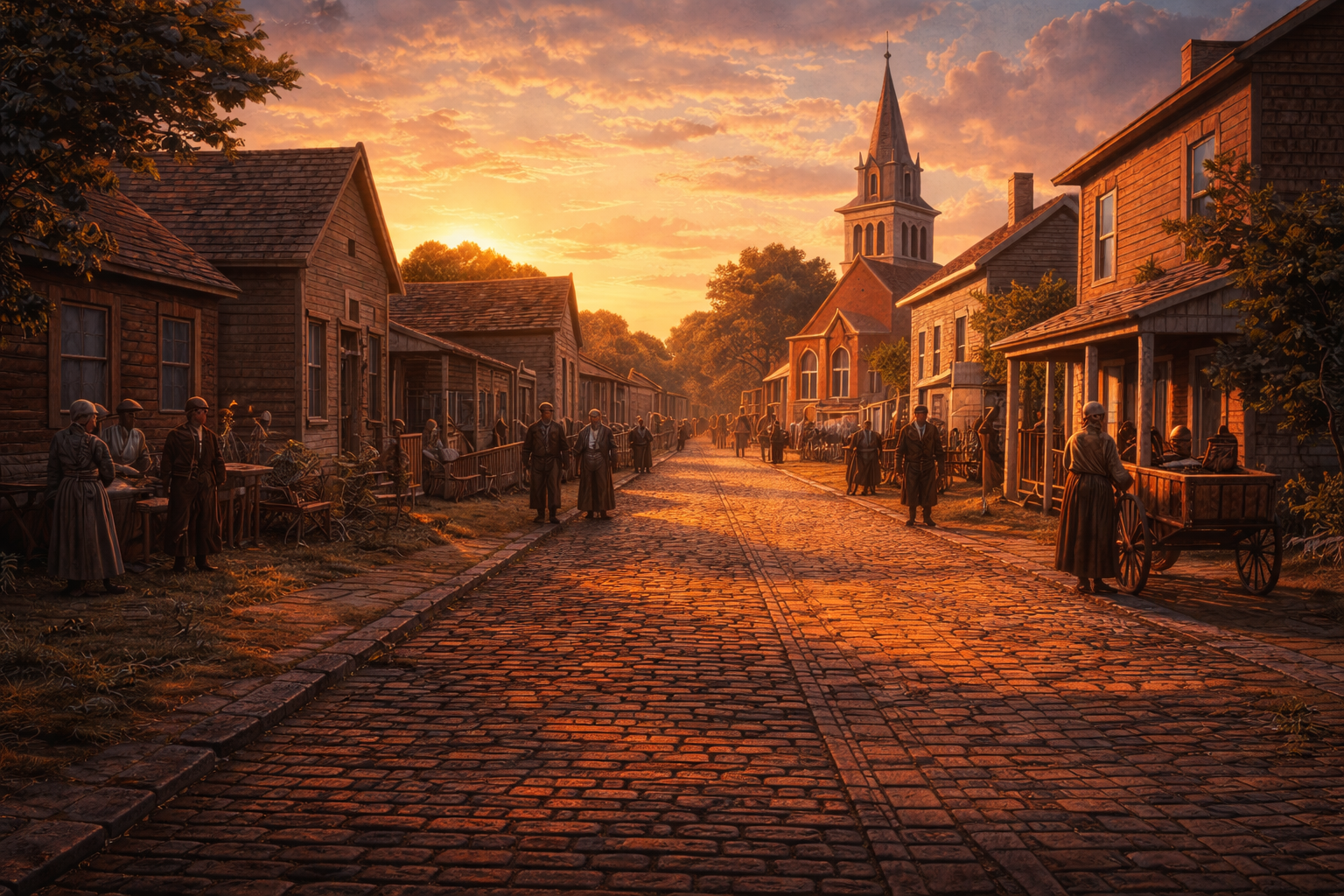
As someone who now calls Houston home, visiting Freedmen’s Town carried a different kind of weight for me. Walking those streets, you can feel the presence of the people who built that community—men and women who had only recently secured their freedom and immediately set about building lives, institutions, and opportunity for the generations that would follow. There was a quiet sense of belonging standing there, a reminder that the spaces we preserve are not only historical markers, but living connections to the resilience of our ancestors. —Will Davison Jr.
Moments like this reveal why preservation matters. Landmarks connect us to the past in powerful ways, but institutions also play a critical role in safeguarding the narratives, artifacts, and scholarship that deepen our understanding of history.
The National Museum of African American History and Culture in Washington, D.C., stands as one of the most significant modern institutions dedicated to telling this story. Through exhibits that span centuries—from the transatlantic slave trade to contemporary cultural achievements—the museum illustrates how Black history is inseparable from the broader American experience. In Montgomery, Alabama, the Legacy Museum and the National Memorial for Peace and Justice offer another powerful example, documenting the history of racial violence while encouraging visitors to confront the past with honesty rather than avoidance.
Education has long been another cornerstone of preservation. Historically Black Colleges and Universities were founded during periods when Black students were largely excluded from higher education elsewhere. Institutions such as Howard University, Spelman College, Morehouse College, and Prairie View A&M University have served not only as centers of academic learning but also as guardians of cultural memory.
Yet even with landmarks and institutions in place, the broader conversation about history remains complex. Debates continue about how American history should be taught, which stories belong in classrooms, and how difficult subjects should be presented to younger generations. But history is rarely simple or comfortable. Every nation carries stories of triumph alongside stories of struggle, and presenting those stories honestly allows societies to learn from them rather than misunderstand them.
For many people, the preservation of Black American history is also deeply personal. It is not only about museums or monuments, but about the hope that future generations will be able to see and touch the evidence of where they came from.
I often think about the children I may one day raise and how I would want them to experience history—not only through stories shared at the dinner table, but through real places, preserved artifacts, and living institutions that connect them to their ancestral past. While parents carry the responsibility of teaching their children where they come from, that knowledge should not rely solely on memory or oral tradition. It should live in preserved spaces and institutions that safeguard the story of people who endured, built communities, and shaped the nation in ways that still resonate today.
—Leena Aldridge
When history is protected in this way, it becomes more than a lesson. It becomes a bridge between generations.
Understanding the story of Black Americans also broadens the national narrative itself. It reveals how music, literature, science, political activism, and entrepreneurship have been shaped by people who often created opportunity in the face of exclusion.
Black American history is not a separate narrative that exists on the margins of the national story. It is woven into the fabric of American life.
To preserve that history is to preserve the truth of America itself.