
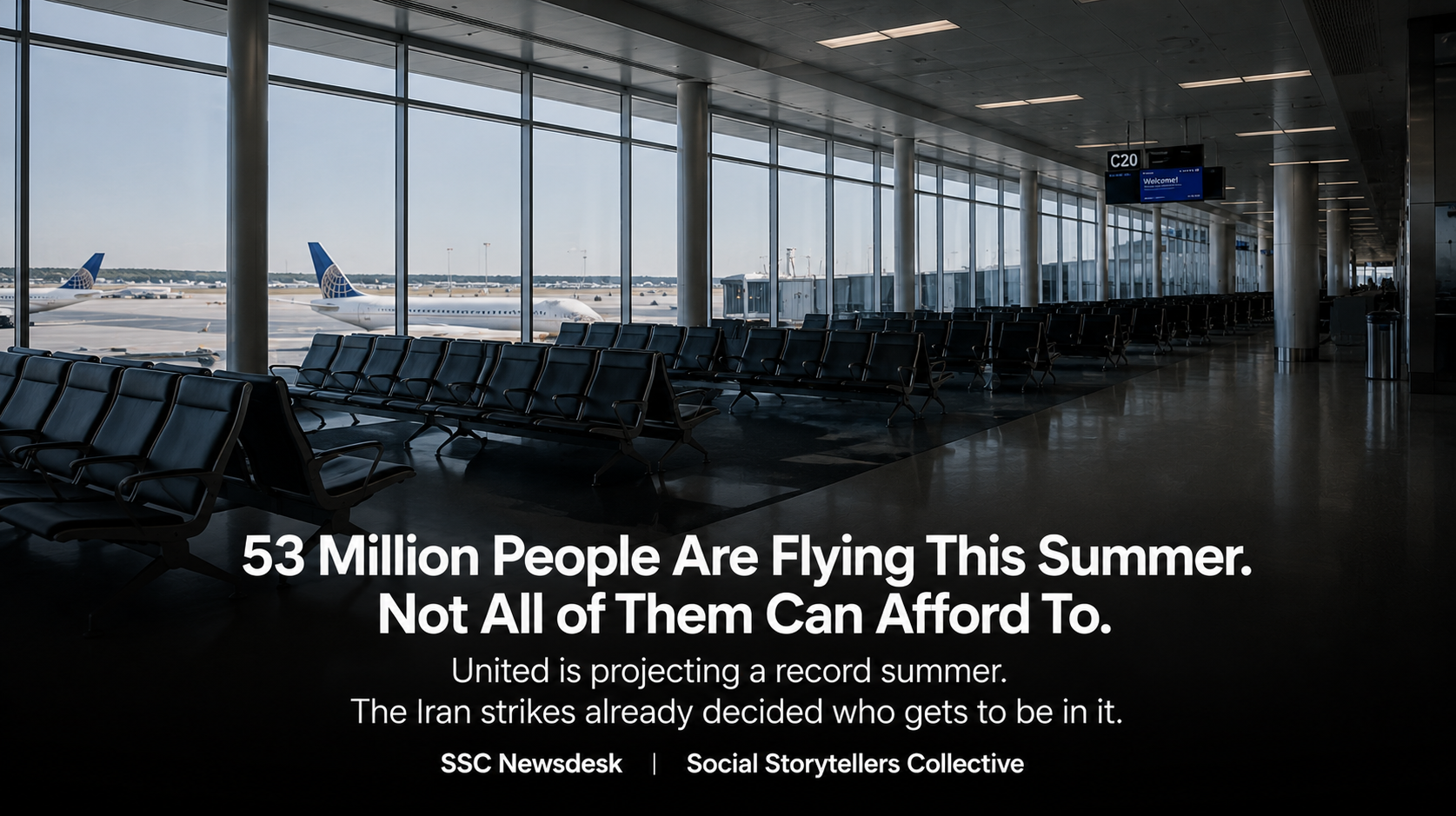
United Airlines wants you to know that the summer of 2026 is going to be historic. The carrier announced today that it expects more than 53 million passengers between June and August — roughly 3 million more than last summer. Demand is being driven by a rare total solar eclipse crossing Europe on August 12, World Cup matches hosted across North America, and major concert tours pulling international travelers to cities including Amsterdam and London. Eclipse-related bookings to Bilbao, Madrid, Barcelona, and Reykjavík are up more than 50%. World Cup host city bookings are up nearly 20%. The numbers are real. The story underneath them is more complicated.
To understand what’s actually happening in summer travel right now, you have to go back to February 27, 2026.
That was the day jet fuel cost $2.39 a gallon. It was also the day before U.S. and Israeli military strikes on Iran began. By April 2, fuel had spiked to $4.78 a gallon — nearly double in five weeks. United CEO Scott Kirby told employees in March that if prices held at that level, it would add $11 billion in annual fuel costs to the airline’s operations. For context: United‘s best year ever produced less than $5 billion in profit. The math didn’t work.
United responded the way airlines always respond when the math stops working: it cut. The carrier reduced capacity by approximately 5%, targeting off-peak routes, redeyes, and mid-week flights — the flights that serve budget travelers, last-minute bookers, and people without the flexibility to plan months in advance. It shed its cheapest fare classes. It slashed its full-year profit forecast from $12–14 per share to $7–11. Last-minute walk-up fares to Caribbean destinations rose 74%. Hawaii fares rose 21%. Fuel has since stabilized at around $3.51 a gallon — still 47% above pre-war levels.
The summer travel boom United is projecting is real — for the travelers who remained after those cuts. UBS summarized the situation this week as “travel remains a priority, particularly for U.S. consumers.” That’s accurate. It’s also incomplete. Travel remains a priority for the consumers who can still afford the tickets after fares absorbed a war premium. The passengers who got priced out in March and April aren’t in United‘s summer forecast. They didn’t cancel. They just never booked.
This is what a two-tier travel economy looks like from the inside. The events driving summer demand — a European solar eclipse, World Cup matches, Harry Styles residencies in Amsterdam — are concentrated in destinations that require international tickets, premium planning, and significant discretionary income. The routes and fare classes that served working-class and budget travelers were the first to go when fuel costs spiked. The passengers who remained are the ones who could absorb a $400 fare increase without rethinking the trip.
United‘s 53 million passenger projection tells you who’s left in the room. It doesn’t tell you who stopped showing up — and decided they couldn’t afford to anymore.