
End of Day Closing Note | Friday, June 12, 2026
Salesforce is profitable. The Dominican Republic is growing. The park service solicited feedback. Nothing is broken — and that’s the story
Today: a tech company eliminating workers while reporting record AI revenue, a federal government discovering its own public comment system, media companies selling proof of human authorship, a country deporting the workers who built its growth, three decades of women’s labor producing the same income share, a federal holiday losing its corporate support, the rising cost of connection, a streaming consolidation that kept the content and moved the mandate, a trillion-dollar IPO and the rural customers footing the bill, AI spending showing up on grocery receipts, and a federal child care rule that could shrink the workforce meant to expand access.
The stories in today’s edition share a mechanism that is harder to see than a single dramatic decision. Institutions are functioning. Processes are working. The outputs are changing. Salesforce is not failing — it is succeeding at building a platform that reduces its own headcount while growing revenue. The Dominican Republic is not in crisis — its GDP is growing, its investment grade rating is approaching, and the workers who built that growth are being deported. The National Park Service did not suppress public comment — it solicited it, and 35,000 people used the mechanism to document their opposition to the policy producing the suppression. Each institution is operating within its own logic. The cumulative direction is the same.
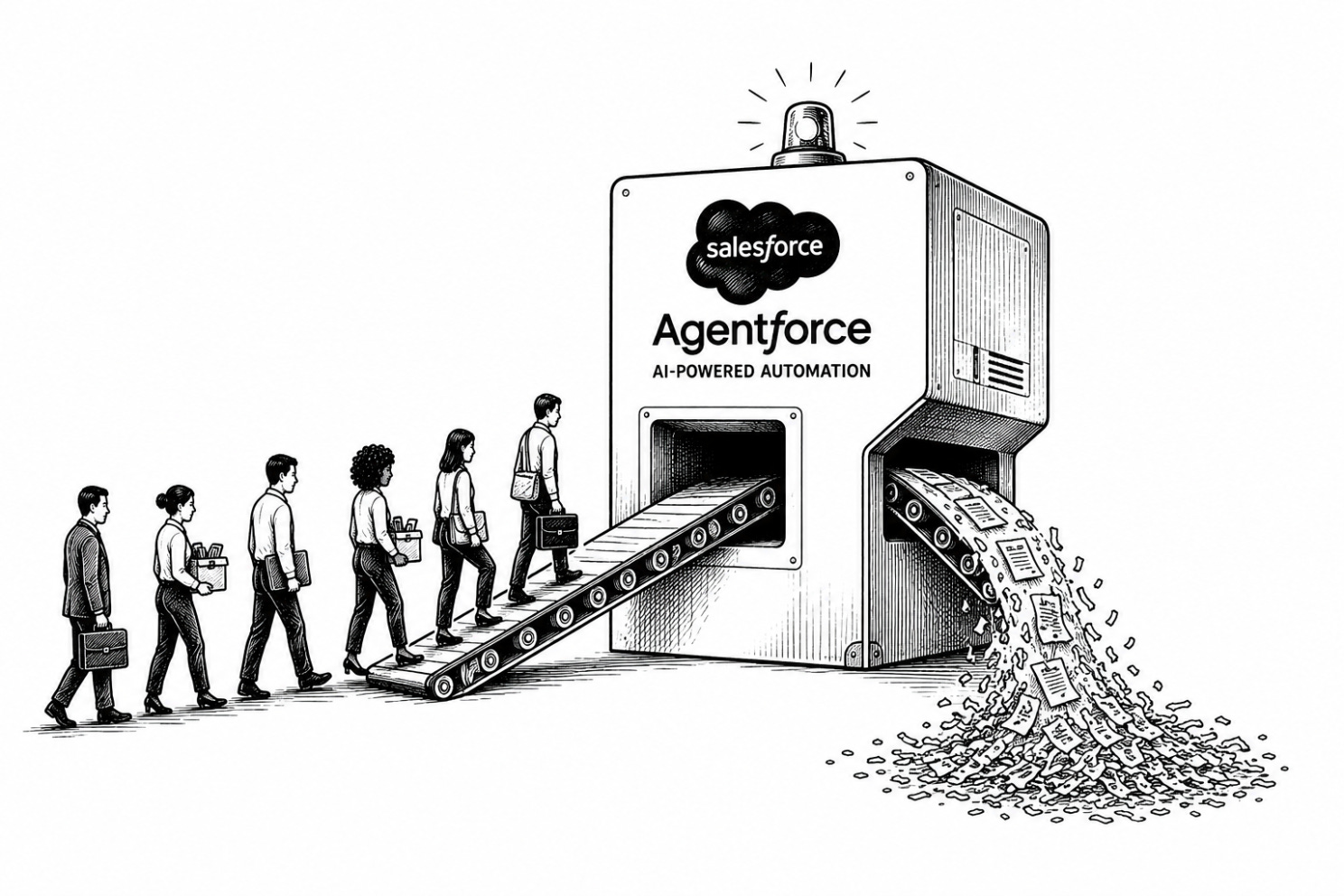
Salesforce cut jobs for the third time in nine months on June 10. A California WARN notice confirmed 86 San Francisco-based positions eliminated across technology and product, general administration, and sales — including workers associated with Agentforce, MuleSoft, and Marketing Cloud. This is the same Agentforce that crossed $1 billion in annualized revenue. The same platform posting 205% year-over-year growth. The company is eliminating workers in the division generating its fastest growth while simultaneously describing that growth to investors as the primary reason for optimism. The resolution is not a contradiction — it is the AI economy’s labor story in miniature. SSC examined why the company building the automation tool is using that tool to eliminate its own workers, while reporting record growth in the revenue generated by doing so.
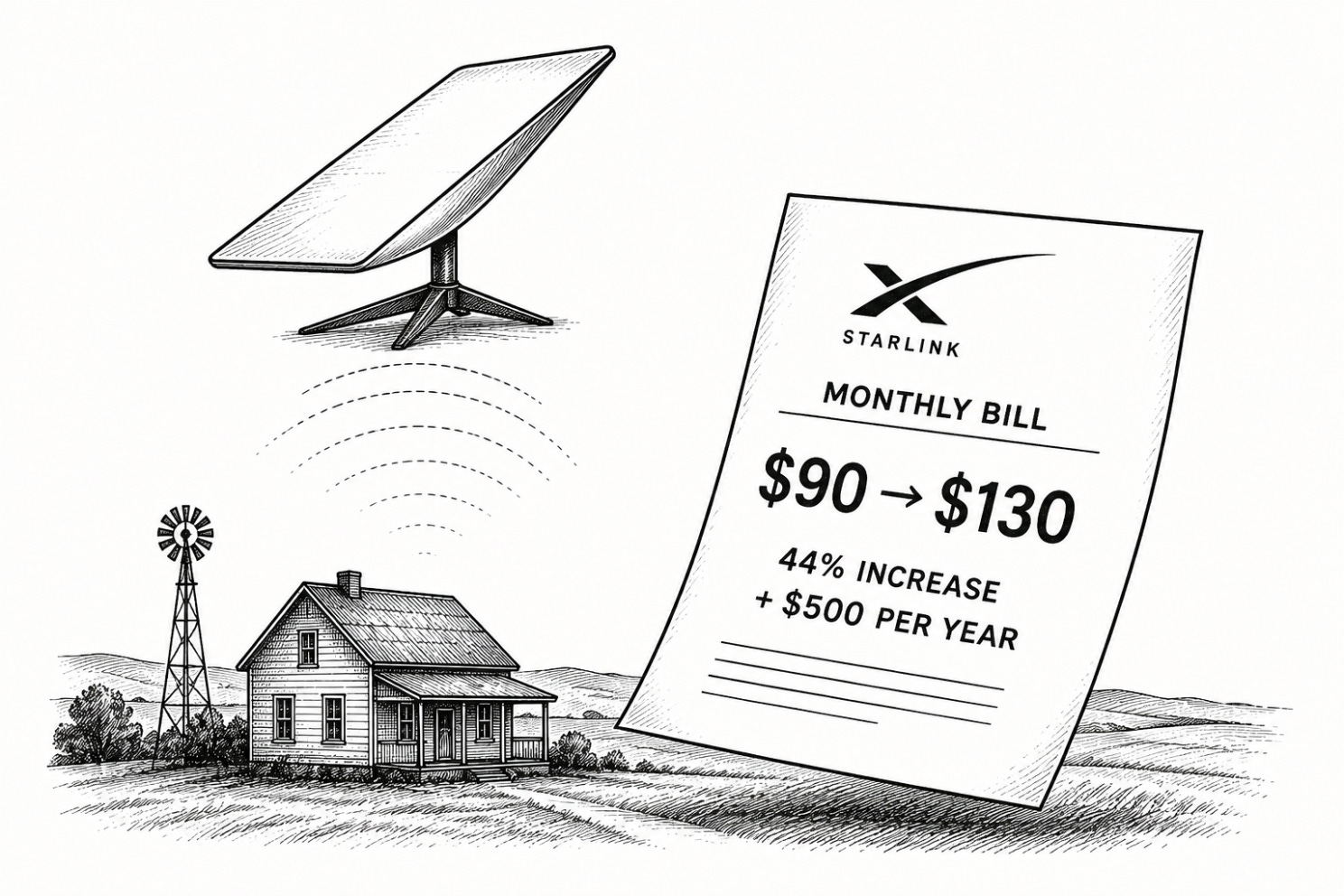
When Julie Slama and her husband moved to a home outside Dunbar, Nebraska in 2022, Starlink was their only practical broadband option — and their $90 monthly rate felt reasonable. This week, The Washington Post reported they’re facing a 44% increase in their bill, an annual jump of nearly $500. SpaceX went public this week at a valuation exceeding $1 trillion — the third trillion-dollar stock market debut of 2026. In the days surrounding the listing, Starlinkraised prices across most of its plans and added a new monthly hardware fee. In some markets — Seattle, Redmond, Portland — new residential signups now face a $1,000 “demand surcharge” on top of the $349 standard equipment cost, a fee that has tripled in the past month alone. Starlink became the default broadband option for millions of rural households specifically because no competitor exists in those markets. SSC examined what happens when a service crosses the line from “product” to “the only way to get this” — and what it means that the company’s pricing power was fully priced into its IPO.
In March 2025, an executive order directed the rewriting and sanitization of American history at national parks. Interior Secretary Doug Burgum followed with Secretarial Order 3431, instructing superintendents to solicit visitor feedback on exhibits deemed negative or unpatriotic — through posted signs and QR codes. The Associated Press analyzed 35,000 public comments submitted in the second half of 2025 and recently made public through a lawsuit. The overwhelming majority did not flag negative content. They criticized the effort itself. At the President’s House Site in Philadelphia, officials removed an exhibit about Ona Judge — a woman who escaped enslavement from George Washington‘s household. A federal judge ordered it restored on February 19. SSC examined why the mechanism the administration built to legitimize censorship became the primary documentation of public opposition to it.
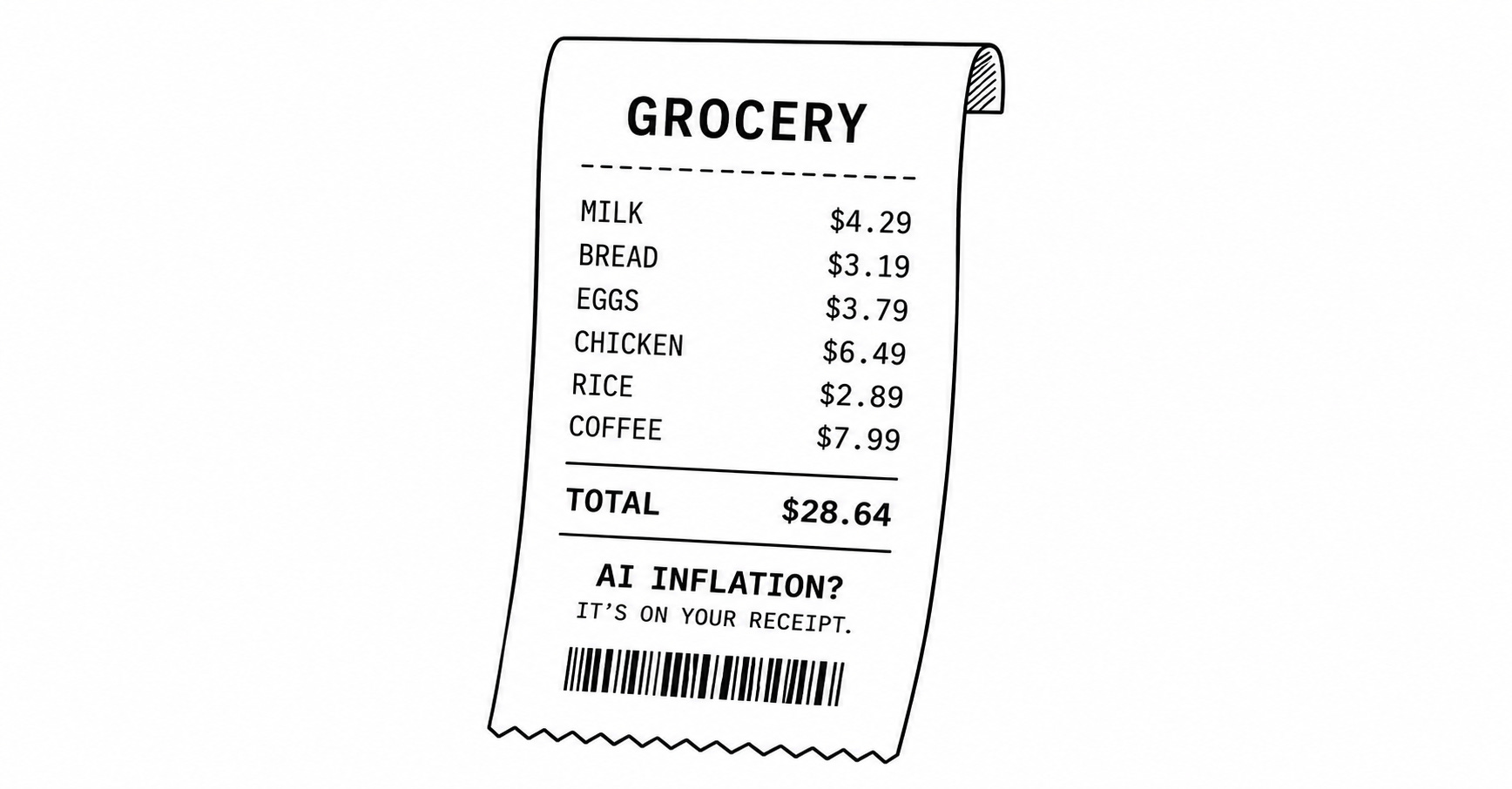
Americans have spent 2026 absorbing price increases from familiar sources — the Iran conflict pushing gas prices higher, ongoing supply chain disruption, standard inflation. The Washington Post reported this week on a less familiar culprit now showing up in Federal Reserve commentary and Wall Street analysis: the hundreds of billions of dollars technology companies are spending to build AI infrastructure. DRAM (memory chip) contract prices surged 90% to 95%in a single quarter as manufacturers reallocated production capacity toward AI servers. IDC projects consumer prices for PCs, smartphones, and tablets will rise 10% to 20% by late 2026. Electricity prices rose 6.9% in 2025, with Goldman Sachs projecting another 6% increase through 2027 as data centers drive roughly 40% of U.S. electricity demand growth. Microsoft and Anthropic have both made public commitments to cover the additional electricity costs their data centers create for residential ratepayers. SSC examined how a server farm becomes a grocery bill — and whether absorbing that cost stays a voluntary exception or becomes the baseline expectation.

Trust used to arrive automatically in the media business. Produce accurate reporting, attract readers, sell advertising. That model assumed integrity and sustainability pointed in the same direction. Generative AI has flooded the information ecosystem with commodity content at a scale no editorial operation can match on volume. Only 12% of readers report being comfortable with AI-generated news content. 90% of Americans want news agencies to disclose when they use AI. Substack reached an estimated 5 million paid subscriptions by 2025 — nearly half the scale of The New York Times‘ digital audience. The Daily Beast‘s Keith Bonnici named the emerging consensus directly: the most valuable media assets will be those that have cracked profitable growth without Google. SSC examined why audiences are no longer paying for information — they are paying for the assurance that a human being with a name and a track record produced it.
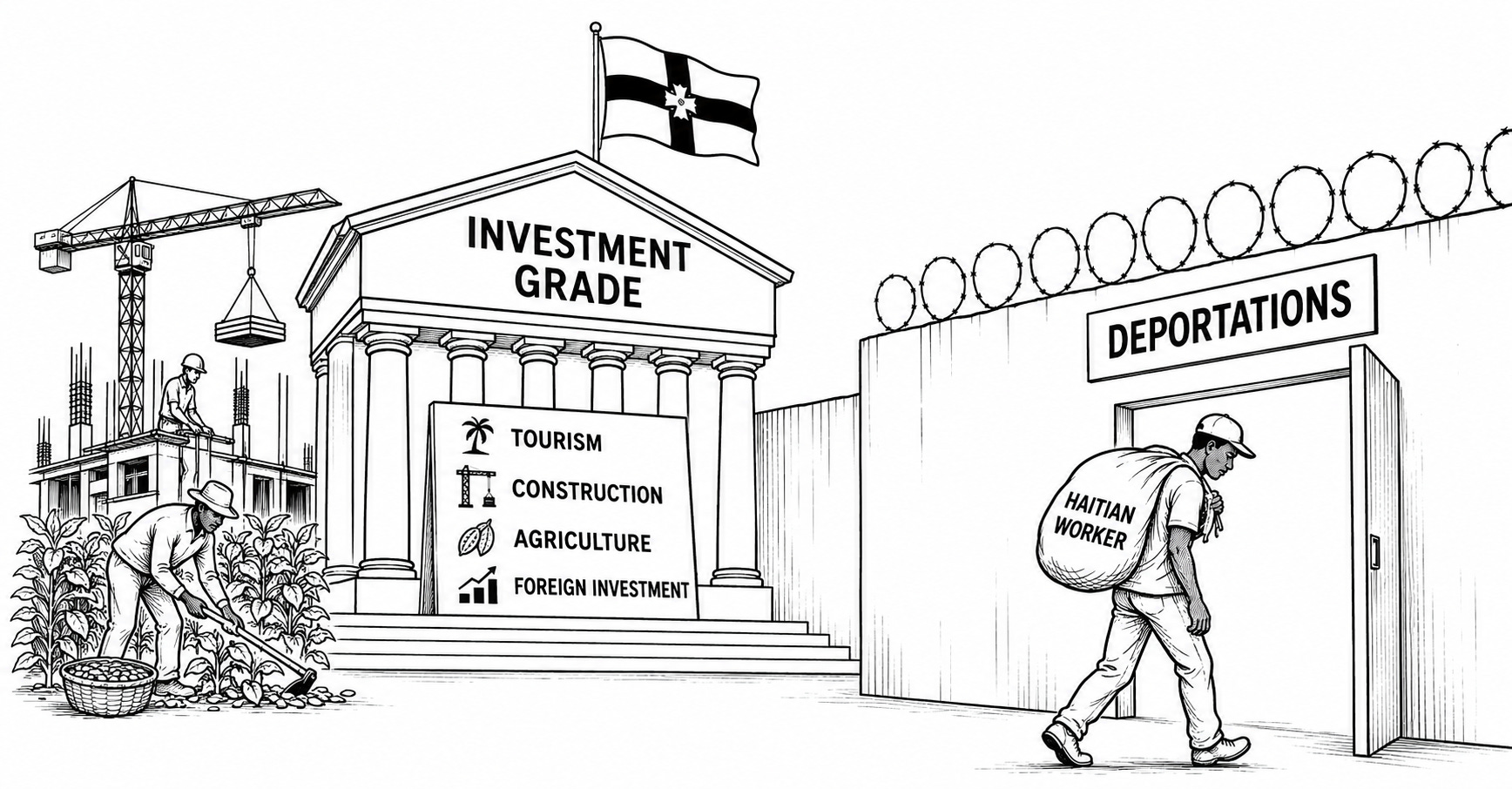
The Dominican Republic deported more than 250,000 Haitian nationals in 2025 alone — tripling previous annual rates. In the same period it is pursuing investment-grade credit status by 2028, projecting GDP growth of 4.5% to 5%, and recording its fourth consecutive annual record in foreign direct investment — $5.03 billion in 2025, a 97% increase over five years. Haitian workers fill an estimated 80% of construction jobs in the Dominican Republic. When the government deported a large share of that labor force in 2025, the construction sector contracted for four consecutive quarters. Credit rating agencies measure GDP growth, fiscal discipline, and institutional stability. SSC reported on why they do not measure who built it — and why the workers whose deportation is framed as a precondition for investment grade are already paying the cost of achieving it.
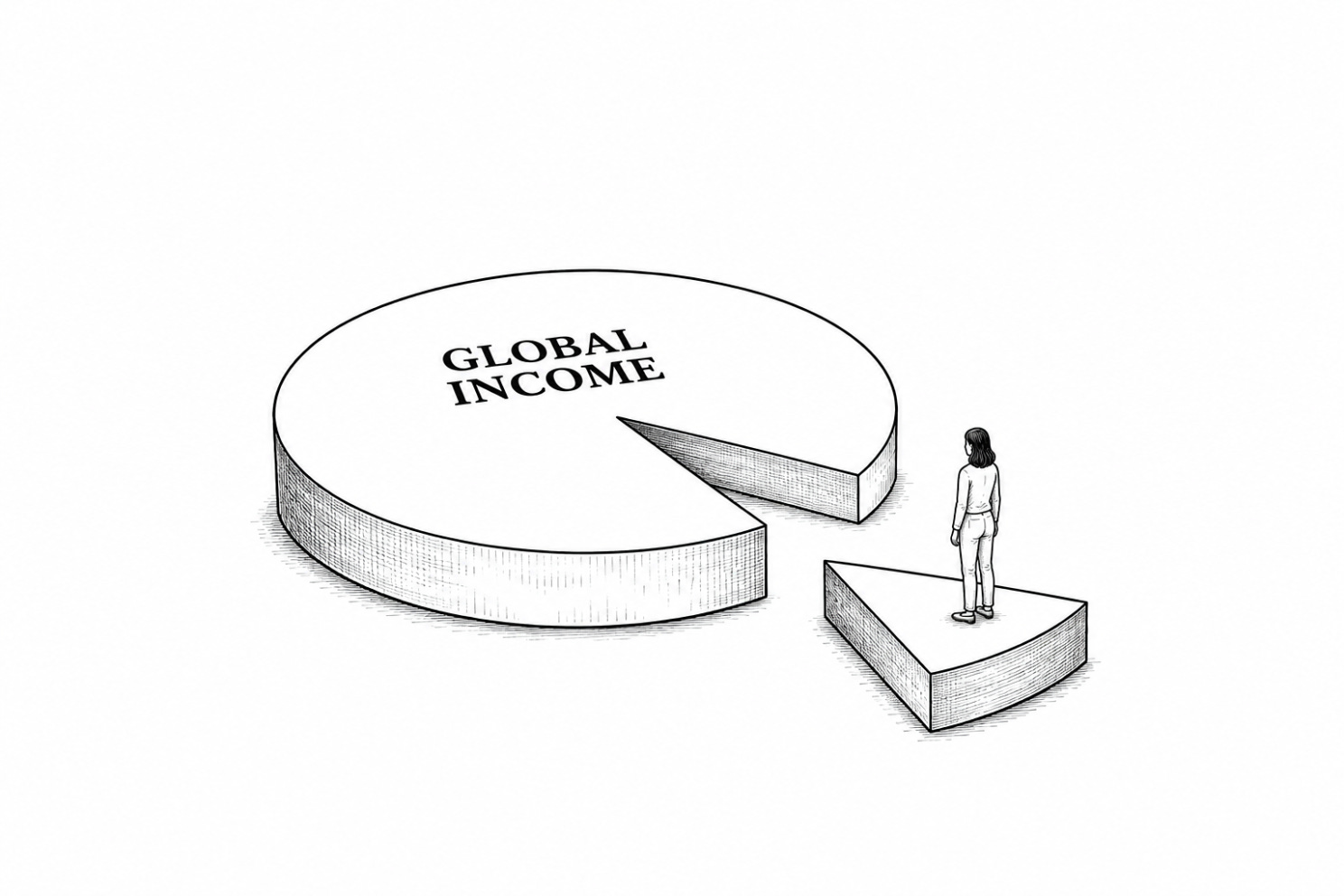
The World Inequality Report 2026 finds that women globally capture just over a quarter of total labor income — a share that has barely shifted since 1990. In the same period, women’s educational attainment rose sharply, workforce participation increased across every major region, and legal frameworks in dozens of countries were rewritten to expand economic rights. The inputs changed. The output did not. Women work an average of 53 hours per week compared to 43for men once domestic and care work is included. When unpaid labor is counted, women earn only 32% of what men earn per working hour — compared to 61% when unpaid work is excluded. SSC reported on why the difference between those two numbers is the economic value of the work the global economy has spent three decades not counting.
Juneteenth became a federal holiday in 2021. Corporate America responded with pledges, events, funding, and visible commitment. By 2026, the support has thinned significantly. The National Endowment for the Arts rescinded grants tied to Juneteenth programming. Denver‘s Juneteenth festival was cut from two days to one after corporate funding dried up. Verizon and Amazon have pulled back from prior commitments. The holiday is still on the federal calendar. The infrastructure that was supposed to give it institutional weight is being quietly removed. SSC examined why a federal designation without sustained institutional commitment produces a holiday in name while the mechanisms giving it meaning are being defunded.
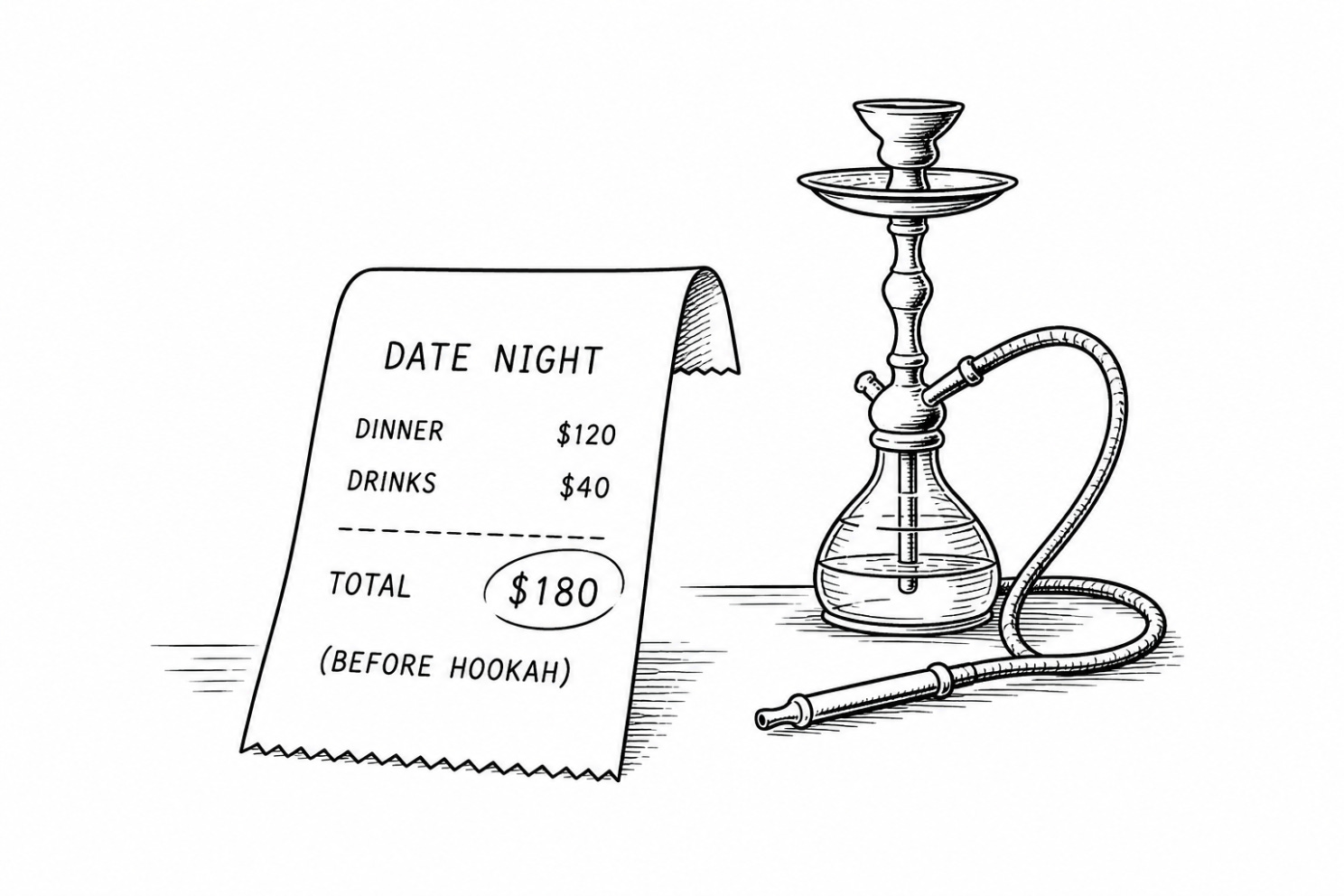
A post on X went viral this week describing the rising cost of a single date, sparking thousands of replies comparing receipts rather than relationship advice. One person described a four-day date costing roughly $750. Another described spending $400 to $500 on first dates. Dating once relied on neighborhoods, churches, parks, community events, and other low-cost gathering spaces. Those spaces have been replaced by a marketplace of restaurants, cocktail bars, concerts, rooftop lounges, and curated experiences. Connection got more expensive at the same moment wages stopped keeping up. SSC examined why when belonging becomes a purchasing decision, loneliness stops being only a social problem — it becomes an economic one.
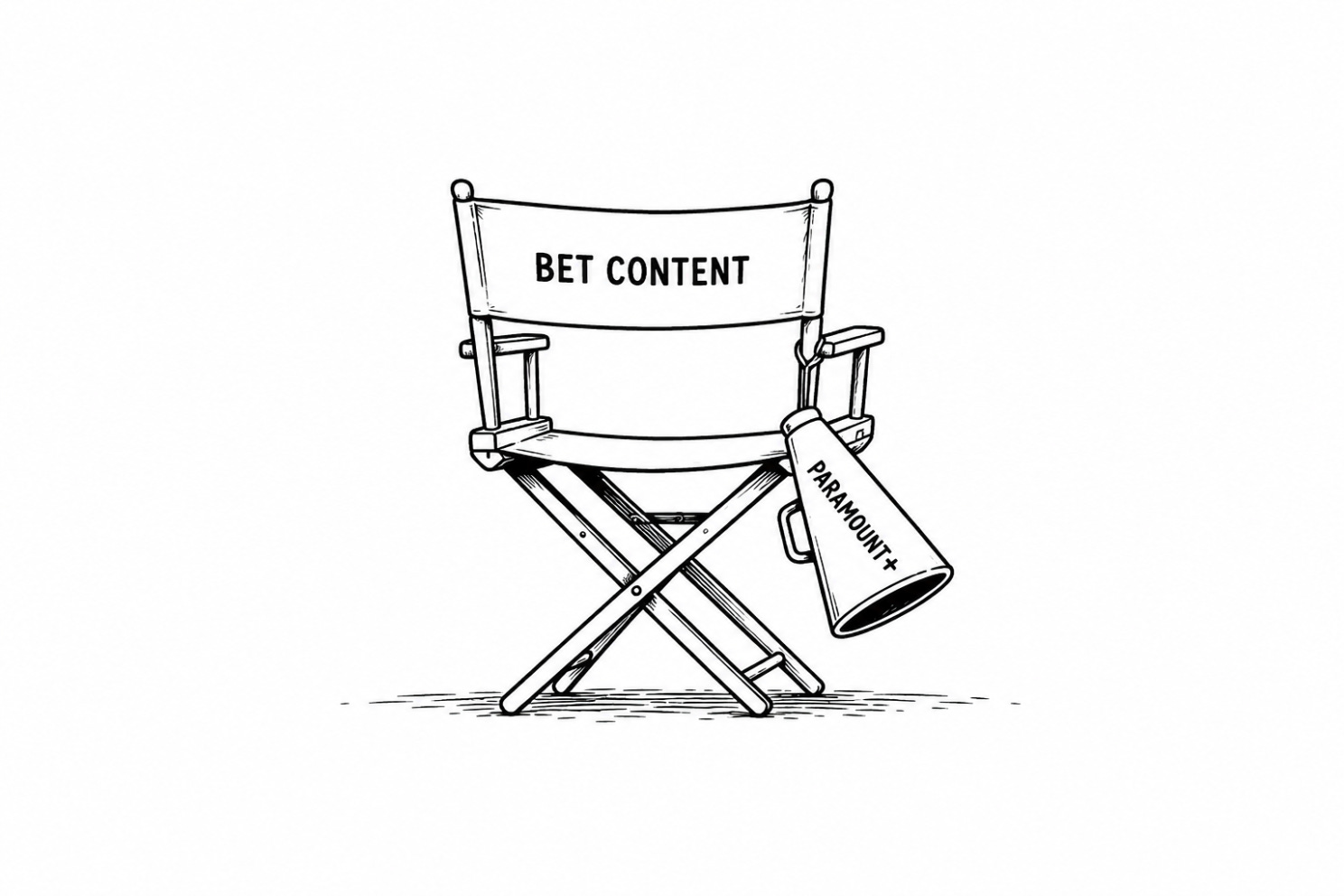
Paramount Skydance announced in March that BET+ would cease operations as a standalone service, folding its programming into Paramount+ after buying out Tyler Perry Studios‘ 25% equity stake. The content stays. The question is what happens to it now — inside a company that, in the same period, eliminated DEI staffing goals, stopped collecting diversity data, and removed DEI metrics from its employee bonus program. A standalone platform with a specific cultural mandate and partial Black ownership makes content decisions inside that mandate. A BET-branded hub inside a conglomerate that has formally reduced its DEI commitments makes content decisions inside a different set of incentives. SSC examined why the measure of this decision will not be how many people can stream BET programming next year — it will be whether the institutions making those decisions continue to commission stories that would not have existed without a mandate to tell them.
None of today’s institutions are broken. Salesforce is profitable. The Dominican Republic‘s economy is growing. The park service got its feedback. The holiday is still on the calendar. Everything worked the way it was supposed to.
That’s the point. The decisions in today’s edition were each made through normal channels, by people doing their jobs — and they still landed hardest on the people with the least ability to absorb them. Construction workers in the Dominican Republic. Tech workers at Salesforce. The communities whose history was nearly edited out of a national park. That’s not a system failing. That’s a system working, for some people more than others.
Daily Visual Signal
The Standing Institution
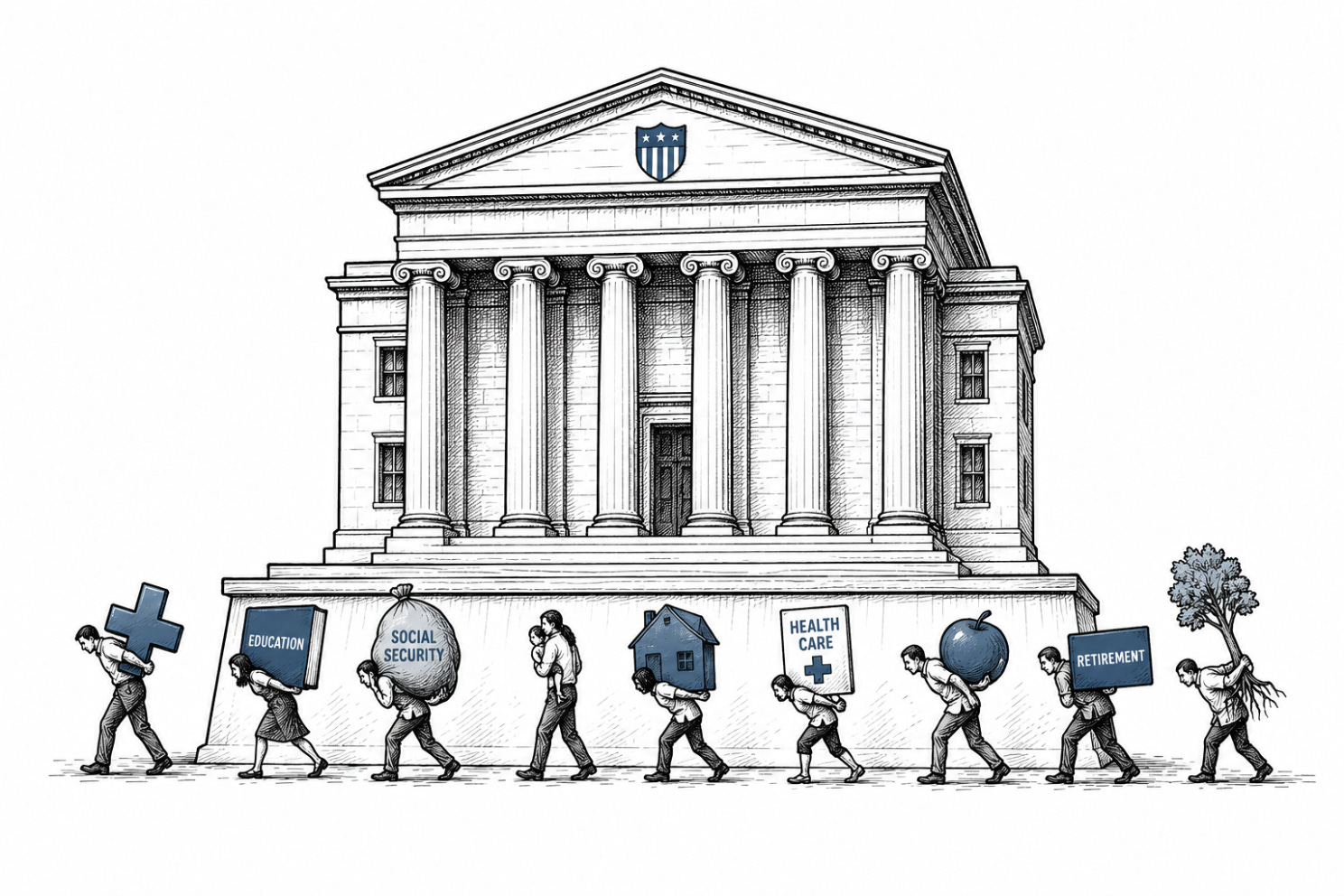
The Standing Institution — A single large institutional structure — a building, a platform, a seal — standing intact and fully formed. The protection has been redistributed downward. Editorial line illustration, pure white background, carbon black lines, slate blue accent only.
Get SSC analysis delivered to your inbox every day. Subscribe free on Beehiiv: socialstorytellerscollective.beehiiv.com
Join the SSC Founding Reader Council
We are launching the Social Storytellers Collective website next week and we want honest feedback before we scale. The Founding Reader Council is a 5-day feedback group running June 15–20. Each morning you will receive Five Things That Matter. Each evening you will receive the End of Day Closing Note. On Friday you will receive Friday Forward. After each edition, a 60-second feedback form. That is all we are asking.
Subscribe: socialstorytellerscollective.beehiiv.com LinkedIn group: linkedin.com/groups/20390015
What We’re Watching Next
The signal to watch over the next 24 to 72 hours connects two stories from today’s edition: the Salesforce layoffs and the broader AI labor restructuring story they represent. Salesforce is not an outlier. It is the clearest available case study of a pattern running across enterprise technology — a company building automation tools that reduce human labor costs, using those same tools to reduce its own human labor costs, and reporting the results as business success.
The question to hold going into next week is whether other enterprise technology companies follow the same pattern in their next earnings cycles or workforce announcements. Microsoft, Google, and Amazon have all made significant AI infrastructure investments in 2026. Each has also made workforce reductions framed as restructuring. The Salesforcemodel — eliminate workers in the divisions generating the most AI revenue, describe the elimination as strategic repositioning, report record growth — is a template that other companies can follow without requiring a new decision. It is already the direction the incentives are pointing.
Watch specifically for any enterprise software company that reports strong AI product revenue in the same quarter it announces workforce reductions. That combination is the Salesforce signal. It means the automation tool has crossed the threshold from supplementing human labor to replacing it — and the company has decided the replacement is worth announcing as a positive development to investors while managing the workforce consequences separately.
The second signal to watch is the Juneteenth story. June 19 is one week away. The pattern SSC documented today — federal holiday designation without sustained institutional support — will be visible in real time next week. Watch which companies issue Juneteenth statements without the programming or funding commitments that would give those statements operational meaning. Watch which cities host events with reduced budgets and reduced attendance. Watch whether the gap between the federal designation and the institutional reality generates coverage or passes without notice.
The Juneteenth story and the Salesforce story are both about the same institutional mechanism: a formal commitment made visible, followed by a quiet withdrawal of the resources that would have made the commitment real. The holiday stays on the calendar. The workers get a severance package. The designation and the restructuring are both procedurally compliant. The cost of both lands somewhere specific.