
Friday Forward | June 6 – June 12, 2026 Social Storytellers Collective | Weekly Edition

From Walmart’s algorithm to Louisiana’s maps — the week’s stories kept measuring the same thing from opposite ends.
Friday Forward is Social Storytellers Collective’s weekly synthesis of the stories we tracked, reported, and analyzed across every beat. One document. The full week.
This week, Walmart put an algorithm in charge of 1.3 million workers’ next move, Louisiana finished redrawing a map it started drawing in 2005, and a company that builds AI told the world it might need to be slowed down — using AI to do it. None of these are stories about institutions breaking. They are stories about institutions working precisely as their incentives were built to make them work — and quietly relocating who absorbs the cost of that design.
That is the thread running through everything below. Twenty-two stories. Five countries beyond the U.S. The same mechanism, running at different speeds, across labor, housing, culture, technology, and political power.
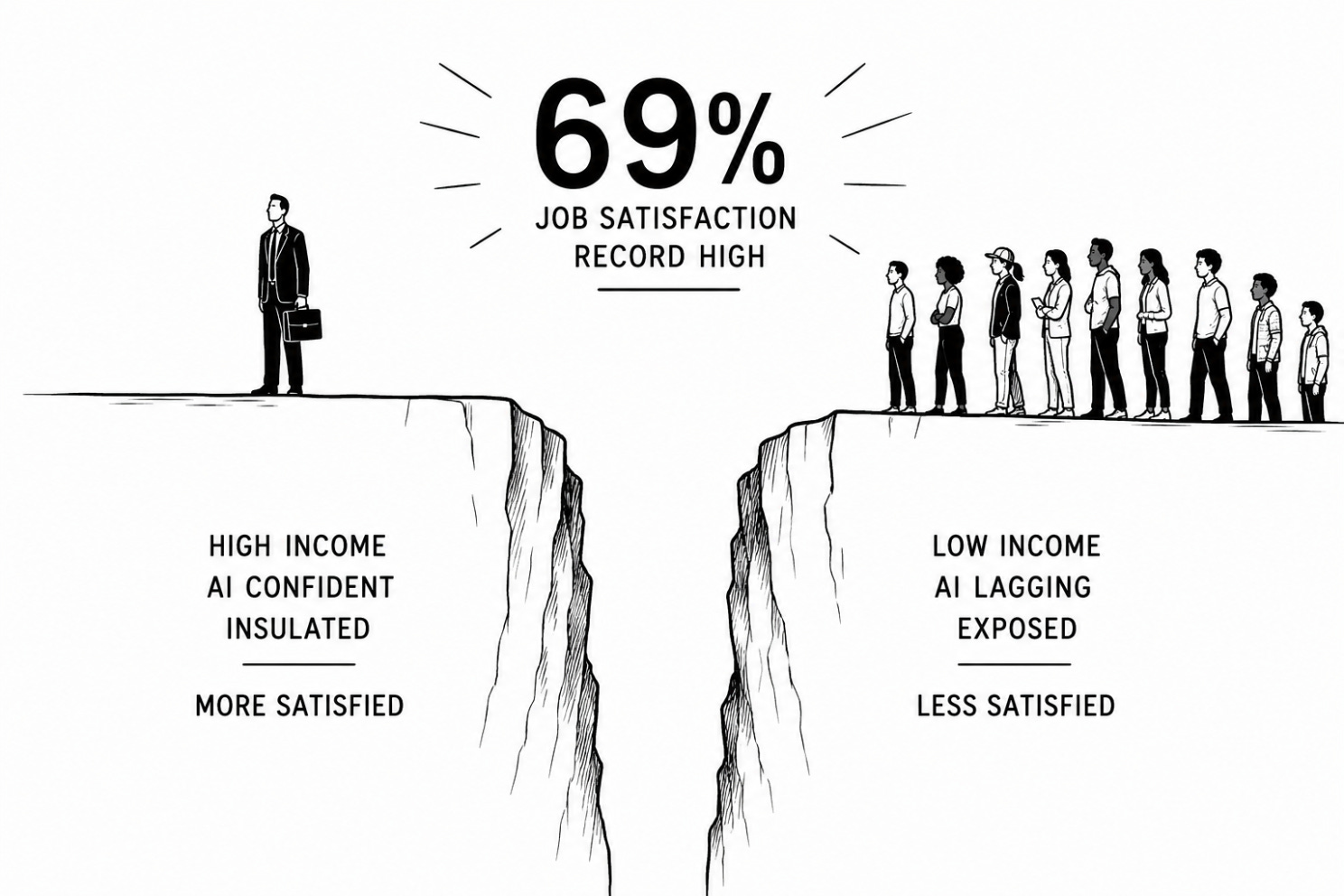
The Conference Board released its annual job satisfaction survey on June 2 with a number that looks unambiguously good: 69% of U.S. workers are satisfied with their jobs — the highest level in the survey’s 39-year history. The aggregate is doing a lot of work. Satisfaction with individual job elements averaged just 59%. Overall satisfaction ranges from 45.3% among workers earning under $25,000 to 76% among workers earning $150,000 or more. Workers under 25 were the only age group to see satisfaction decline — a 5.7 percentage point drop at the exact moment the headline number hit its peak. SSC examined why both numbers are true, and why they are describing the same labor market from opposite ends of it.
A study tracking 1.3 million career histories, conducted by the Burning Glass Institute and NYU’s School of Professional Studies and reported by The Wall Street Journal, found that one in four white-collar workers have gone five years or more without a promotion or meaningful raise. The sector stalling fastest — public administration, at roughly 30% — is disproportionately staffed by Black and Latino workers at the municipal and state level. For the average stalled software developer, the wage penalty reaches more than $43,000 over 15 years. SSC reported on why career mobility compounds the way wealth does — and why its absence compounds just as reliably.

Challenger, Gray & Christmas, Inc. recorded 97,006 announced job cuts in May — the highest May total since 2020 — with artificial intelligence named as the leading stated cause for the third consecutive month. In the same window, 172,000 jobs were added and unemployment held at 4.3%. 1.8 million Americans have been out of work for 27 weeks or more — past the point where unemployment benefits run out in most states. SSC reported on why the economy is adding jobs and cutting them simultaneously, and why the workers on each side of that ledger are not the same people.

The World Inequality Report 2026 found that women globally capture just over a quarter of total labor income — a share that has barely shifted since 1990. In the same period, women’s educational attainment rose sharply, workforce participation increased across every major region, and legal frameworks in dozens of countries were rewritten to expand economic rights. The inputs changed. The output did not. Women work an average of 53 hours per week compared to 43 for men once domestic and care work is included. When unpaid labor is counted, women earn 32% of what men earn per working hour — compared to 61% when unpaid work is excluded. SSC reported on why the difference between those two numbers is the economic value of the work the global economy has spent decades not counting.
Chicago raised its minimum wage to $17.05 an hour, effective July 1 — a real number, a real increase, the kind of headline that reads as progress. The number that didn’t make the press release: the tipped minimum wage rose to $12.96, leaving a $4.09 gap that lands on restaurant and hospitality workers who are disproportionately women and workers of color. States that eliminated the tipped differential entirely — California, Washington, Oregon, Minnesota — did not see the restaurant collapse the industry predicted. SSC reported on why the floor moved and the gap stayed — and why the gap is the part nobody put in the headline.

Walmart told the world something important at its 2026 Associates Week in Bentonville that most coverage missed: approximately 1.3 million U.S. associates now carry AI-powered devices that surface the “best next action,” display store layouts, and guide workers through their shifts in real time. Walmart President and CEO John Furner acknowledged that agentic commerce remains in its early stages — meaning 1.3 million workers are already inside a management system whose long-term design is still being determined. SSC reported on how the automation economy is arriving not through one dramatic announcement but through 1.3 million small recommendations that quietly reshape how people work every day.

Data center electricity consumption is projected to approach 1,050 terawatt-hours globally this year — enough to make data centers, if counted as a country, the fifth-largest energy consumer on earth. U.S. data center energy use could reach 12% of all national electricity consumption by 2028. A data center can be built in 12 to 24 months. Expanding the electrical grid to support it can take a decade. Microsoft is restarting Three Mile Island. Amazon has purchased a nuclear-powered campus in Pennsylvania. SSC examined why the grid is the constraint — and why the people paying to upgrade it are not the people who will own what gets built on top of it.
Anthropic published a proposal this week arguing the AI industry should establish a mechanism to slow or pause frontier AI development if systems begin demonstrating the ability to autonomously design their own successors. The same week, the company disclosed that roughly 80% of the code merged into its own codebase is authored by Claude. The safety concern is real. So is the structural question: large, well-capitalized firms can absorb a pause more easily than startups, open-source developers, or research institutions. SSC reported on why the timing of the warning is not a contradiction of the safety concern — it’s context for it.
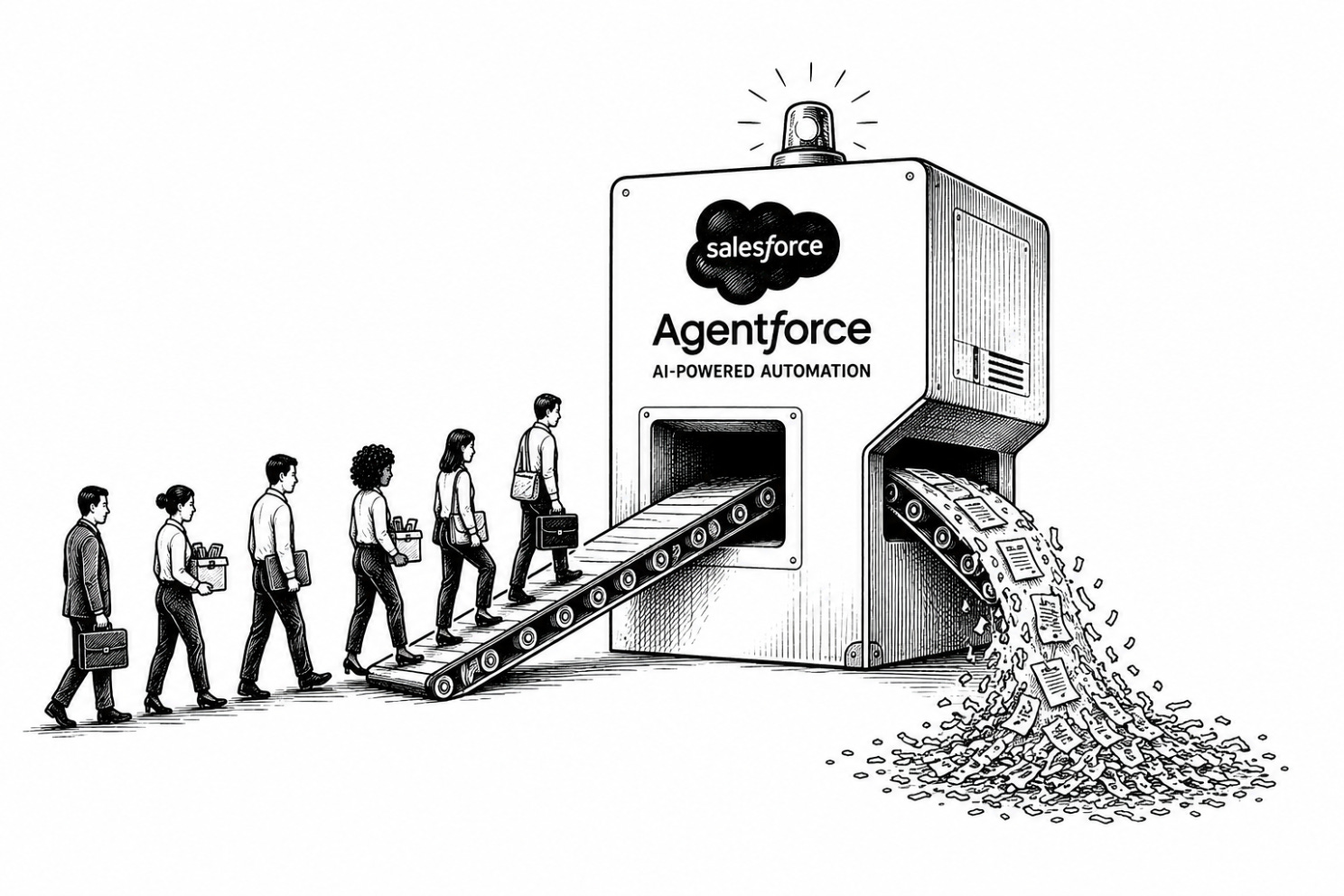
Salesforce cut jobs for the third time in nine months — in the same division generating its fastest revenue growth. Agentforce crossed $1 billion in annualized revenue, posting 205% year-over-year growth, while the company eliminated 86 positions tied to that product. SSC reported on why the tool that increases efficiency is the same tool used to reduce the workforce that built it — and why the result gets reported to investors as a win either way.
In Santa Clara County, 80% of Area Median Income for a four-person household is approximately $164,400 — meaning a household earning that much still qualifies, by California’s own classification system, as needing housing assistance. Teachers, nurses, transit operators, and service workers sit well below that threshold and have been priced out of eligibility for programs that have themselves been priced out of reach of the people they were originally designed for. Miami-Dade County lost more than 10,000 residents between July 2024 and July 2025 as Palantir, Trinity Investments, and the founders of Google all relocated there. SSC examined why the cities recruiting billionaires are losing the workers who make them function — and why those two facts are the same decision.
New Orleans has lead in 7 of 10 homes, according to a Verite News investigation reported by journalist Christiana Botic. Approximately 70% of the more than 1,100 households in the city’s first free residential water testing program had lead detected, with the worst tests recorded at 100 times the federal action level. The city knows where the pipes are. Replacement has been delayed until at least late 2027. In the same period, the Sewerage and Water Board replaced SMART meters across every household in the city — the infrastructure that serves billing. SSC reported on why the infrastructure work that serves residents’ health was the work that got delayed.
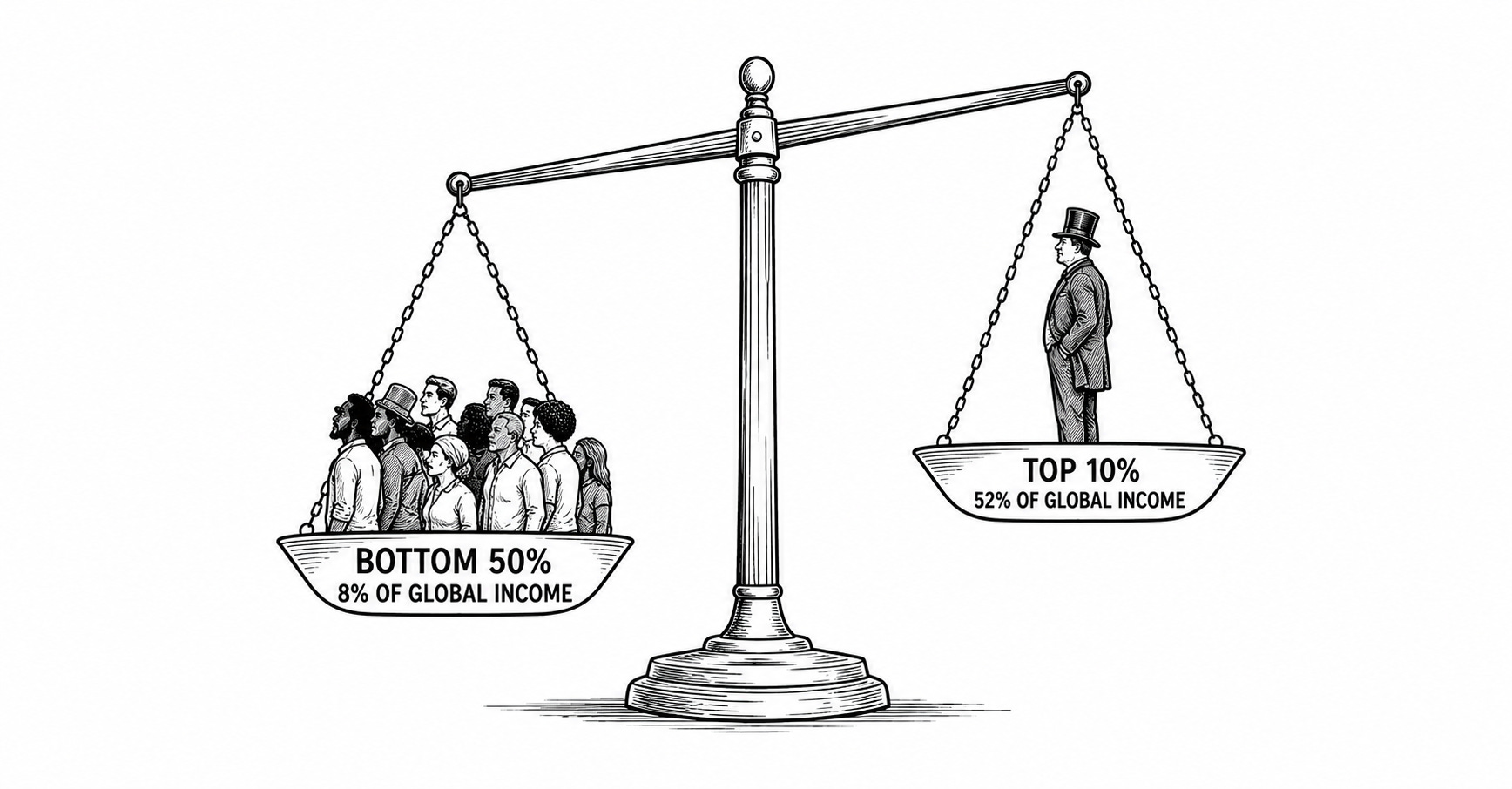
The World Inequality Lab released the Global Justice Report on June 4, 2026, concluding that inequality is not inevitable — it is a political choice. Atlanta is the test case. The city has Black political leadership, HBCUs, and a visible professional class, and has been the most unequal city in America the entire time. According to an Urban Institute dataset cited in the Atlanta Wealth Building Initiative’s report Building a Beloved Economy, the median wealth of white households in Atlanta is $238,355. The median wealth of Black households is $5,180. Read those numbers again — that is not a typo. White households in Atlanta hold 46 times the wealth of Black households, nearly four times the already-severe national ratio of 12.5 to 1. SSC examined what that argument looks like when tested against 30 years of data — and why growth without redistribution compounds the gap instead of closing it.
In China Has 12.7 Million New Graduates and Is Betting AI Can Absorb Them, SSC examined what a record graduating class entering an AI-shaped economy reveals about the credential bargain. Higher education is still producing people for a mobility promise the labor market is quietly rewriting. SSC reported on why education alone cannot protect people when the labor market keeps changing the terms of entry.
The AI economy is starting to choose cities, not just companies — and the geography of that choice is following the same lines as the last economy’s map. SSC reported on why the AI investment map looks less like a new opportunity landscape and more like the old one redrawn at higher resolution.
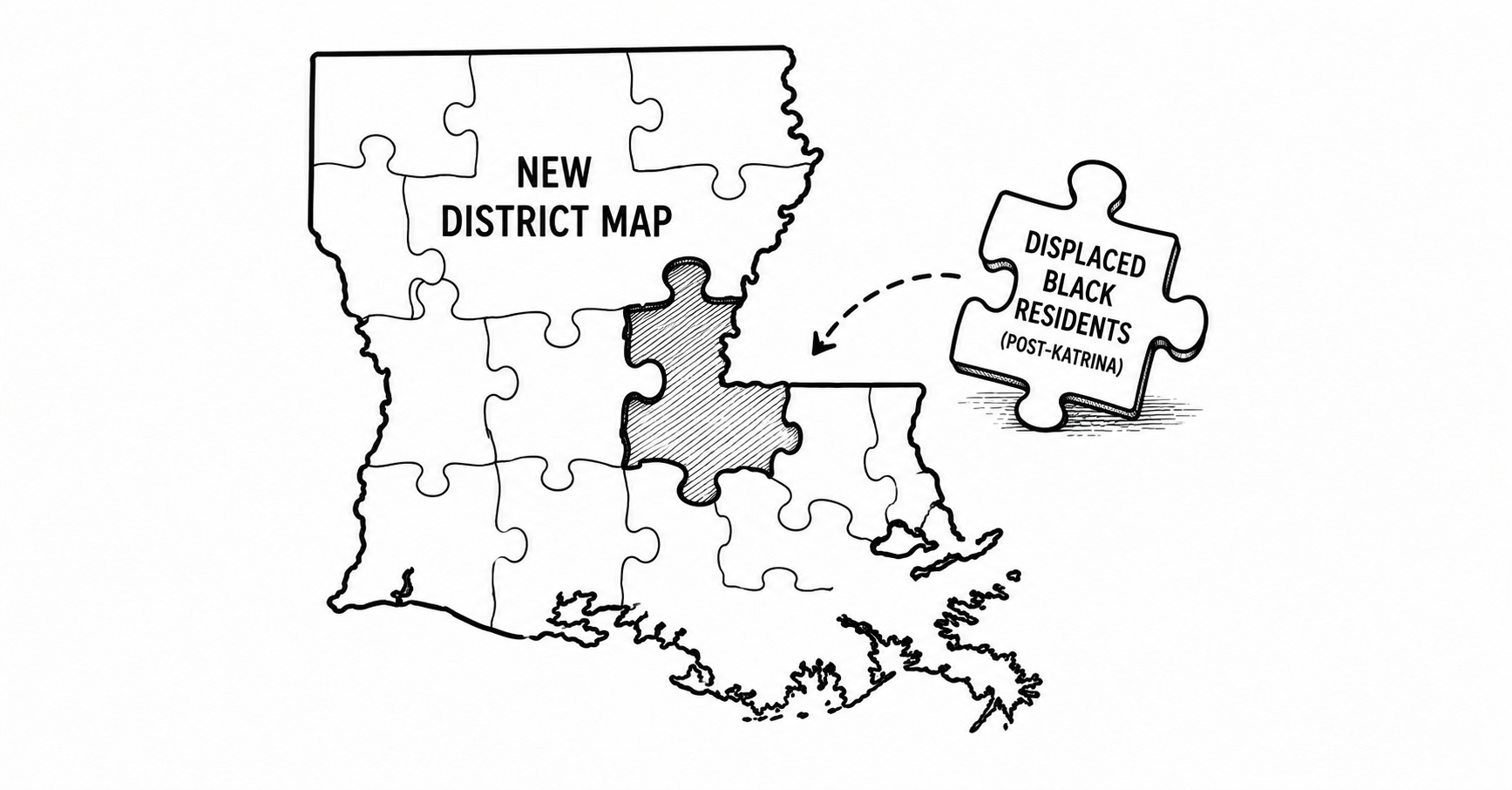
Twenty-one years after Hurricane Katrina displaced nearly 100,000 Black residents who never returned, Louisiana approved a new congressional map eliminating one of its two majority-Black districts — days before early voting began, after tens of thousands of mail ballots had already been returned. Bryson Davis traced the mechanism connecting 2005 to 2026: the census counted who came back, the maps were drawn from that count, and a Supreme Court ruling weakening the Voting Rights Act removed the last legal check. SSC reported on why no single decision produced this outcome — each decision compounded the one before it.
The Dominican Republic is pursuing an investment-grade credit rating while continuing mass deportations of Haitians — two policy tracks that international ratings agencies are evaluating as if they exist in separate columns. SSC reported on why a government’s treatment of the people inside its borders and its credibility with the people financing its borders are not actually separate questions.
National Park visitors have been turning a history-censorship order back on the government — using the same feedback mechanisms built to legitimize the policy to document opposition to it instead. SSC reported on why the tool built to manufacture consent is proving just as useful for the opposite purpose.

Afrobeats generated billions in global revenue. African artists captured 0.7% of global royalty collections. Ghana committed $48 million to its creative economy this week — and SSC reported on why the distribution problem may swallow the investment before it reaches the artists it was meant for.
BET announced it is navigating life under the newly consolidated Paramount Skydance structure while preparing for the shutdown of BET+. SSC reported on why the headline isn’t the shutdown — it’s the question of whether the table BET is rebuilding still belongs to the people it was built for.
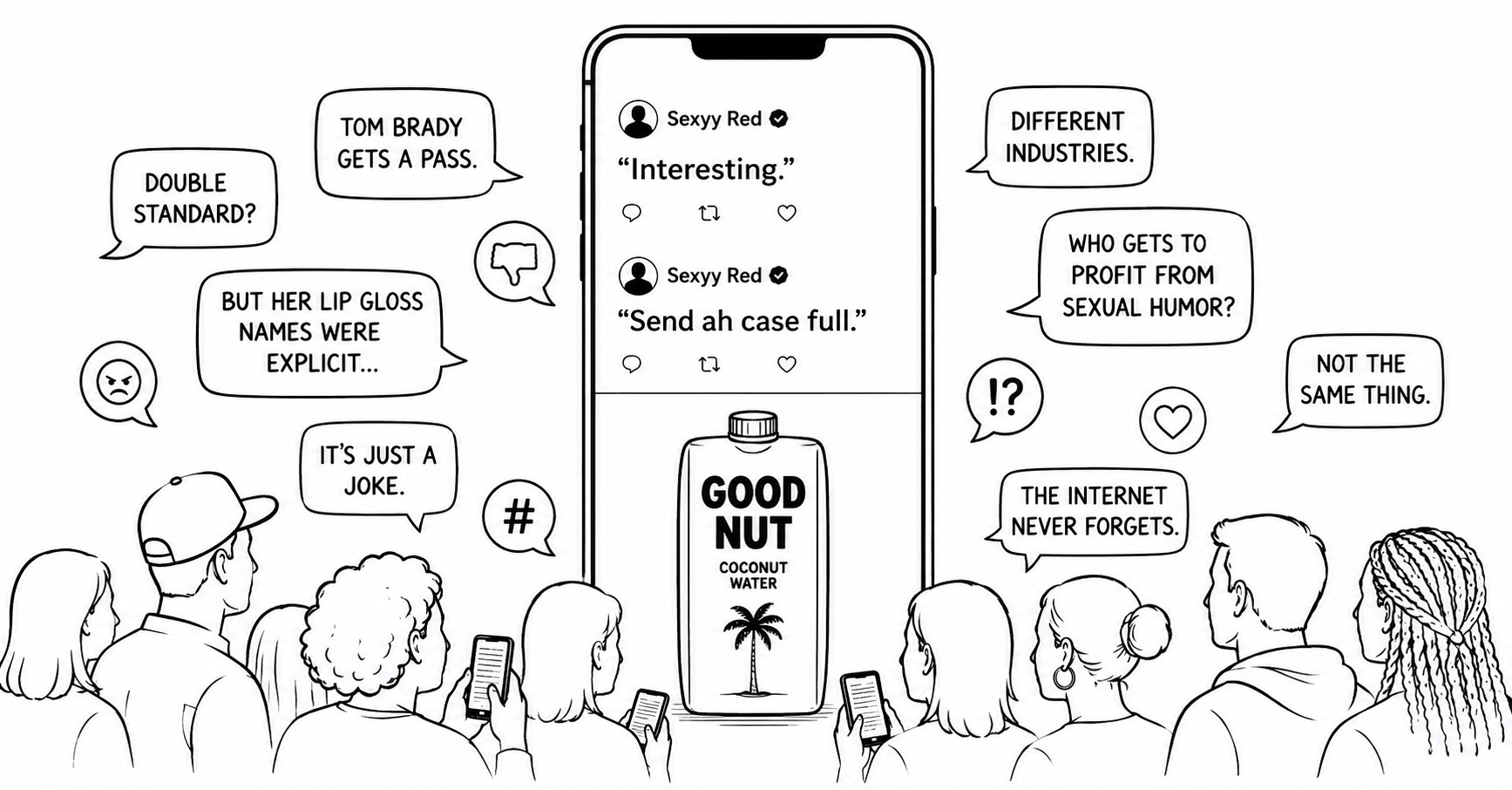
When Tom Brady’s coconut water brand drew online jokes this week, Sexyy Red’s two-word reply — “Interesting” — sent the comment sections straight to her own cosmetics line, whose product names had drawn similar criticism. Days earlier, Rick Ross was photographed flying commercial, and the internet reacted not to the travel but to the gap between the moment and the mythology Ross built his career on. SSC reported on why online audiences don’t apply one fixed standard to anyone — they continuously renegotiate who gets to be provocative, and who is expected to carry the cultural cost when the joke lands differently depending on who made it.
Spelman College selected Dr. Ayanna Howard — a roboticist, entrepreneur, and former NASA engineer — as its 12th president, effective August 1. HBCUs have historically expanded access to systems that excluded Black Americans. The bet here is different: access to the technology matters, but access to the rooms where the technology gets designed, regulated, and financed matters more. SSC reported on why this isn’t a presidential appointment story — it’s a strategic bet about which institutions occupy the rooms where AI gets designed, regulated, and financed.
What Connects All of It
Twenty-two stories. The UK, Japan, Senegal, South Africa, the Czech Republic, China, Ghana, and the Dominican Republic alongside domestic coverage spanning Atlanta, Boston, New York, Miami, New Orleans, Santa Clara County, Chicago, and Louisiana. Industries from retail logistics to AI safety to professional basketball to barbecue. And every single one runs the same mechanism: an institution makes a decision that is, by its own internal logic, reasonable — sometimes even generous. Chicago raised the wage floor. New York bought a hotel. Walmart gave its workers a tool. Spelman hired a president built for the next economy. None of these are bad-faith decisions.
The redistribution happens in the gap the decision doesn’t address. The tipped wage. The visa backlog. The 27-week unemployed. The pipes that serve health instead of billing. The district that no longer exists. The algorithm that decides the next task. Nobody designed these gaps maliciously. Nobody designed them to close, either.
The machine is not replacing anyone. It is reorganizing who decides, who absorbs, and who the aggregate numbers are actually describing.
What We Are Watching

The World Cup is now several days into a 39-day tournament across 16 host cities, and hotel bookings are running below projections in nearly every one of them. Analysts cite visa uncertainty as the primary driver — and the hospitality workers who staffed up for volume that isn’t arriving are absorbing the cost of a system they didn’t design. SSC reported on why the border is determining who gets to accept the invitation. This is The Cost of Access month’s central argument, playing out in real time. We are watching whether host cities adjust anything beyond bar hours.
We are watching the AI labor and infrastructure thread — Walmart’s algorithm-as-manager, the data center power grid story, Anthropic’s safety proposal, the 97,006 May job cuts, China’s 12.7 million graduates. This is no longer background noise. It is the connective tissue running under nearly every other story this week, regardless of beat — and it is August’s theme, Who Owns the Work, arriving six weeks early.
And we are watching Louisiana’s redrawn congressional map as one data point in a redistricting pattern moving faster than anyone predicted in the months since the Supreme Court’s VRA ruling. November is closer than it looks.
Get SSC analysis delivered to your inbox every day. Subscribe free on Beehiiv: socialstorytellerscollective.beehiiv.com
— The SSC Team